Quantum Superposition Hexagrams
- Index for Quantum Superposition Hexagrams
- From Advisor
- Symbolic Reasoning Overlays for the AI "black box" Problem
- Assigning Quaternion Vectors to Hexagrams
- All Vector Calculations use Full Precision
- What Vectors you'll now see in Output Displays
- Idea For Future Extensions: Analog of Rotor Wheel
- Idea for Extension: Quantum Entanglement across 64 hexagrams
- Idea for Extension: Modifying Epsilon Parameter
- Ideas for Extension: Bell States in Quantum Mechanics
- 6 Bits in Hexagrams and Metaphorical Connection to Bell Pairs
- Ideas for Extension: Symbolic System Correlation Index (SSCI) inspired by Bell
- Q: Are the hexagrams matching real-world findings?
- Bottom Line
- Table: Interpretation Guide
- Table. Yarrow Stalk Probabilities
- QUATERNION MATHEMATICS GUIDE
- Table. Coin Toss Probabilities for comparison
- Table. Historical Context Timestamps
- Testcases Section
- Screenshots Section
- figure 1.
- figure. QUASI-DEPENDENT vs INDEPENDENT LINE PROBABILITY
- figure. EPSILON PARAMETER: EFFECT ON QUATERNION VECTOR
- figure. NUCLEAR HEXAGRAM ITERATION: CSV CYCLE
- figure. DNA REPLICATION TRANSFORM ANALOG
- figure. BELL ENTANGLEMENT ACROSS ALL 64 HEXAGRAMS
- figure. HEXAGRAM INTERPRETATION GUIDE: 8 DERIVED VIEWS
- figure. FUXI SEQUENCE vs KING WEN SEQUENCE
- figure. OVERALL TCL MODULE ORGANIZATION (v3.1.0)
- References:
- Quantum Entanglement
- Appendix Code
- I Ching Hexagram Divination System with Quaternion Vector Notation
- Appendix. Lookup-tables for KWS
- Table: Derived Hexagram Summary
- Standard Fu Xi Trigram Mapping (Binary Order)
- Complementary / Shadow / Inverted hexagram map (perfect twins)
- Nuclear hexagram map
- ( Experimental ) Superficial Transform Lookup Table
- King Wen sequence, 6-digit binary number
- CSV List of Nuclear Transform Iterations
- FUXI Sequence vs KING WEN KWS
- Precision Notes for programmatic verification and cross-reference
- CSV List of DNA Replication Transform Example
- Page Is Under Development
- Four Bell Measurement Modes
- Hidden Comments Section
- Program Change Log
Index for Quantum Superposition Hexagrams
Preface
gold 12/31/2025. Here are some TCL calculations on I Ching Divination System in Graphical User Interface GUI shell.
This is from computer methods. I have developed program that dumps the drawn hexagram with the Yarrow Stick probability and furnishes the old fashioned ASCII "XXX XXX" displays. This ASCII displays and preliminary notes are the grunt work of casting a hexagram, which is quick for the AI models, but takes a human about 20 minutes of fumbling with those stick dice and line manipulation. We have received feedback from advisor on previous program.
From Advisor
... The single axis for i*I imaginary axis' suggests a deeper look into the need for more than just 2D complex space.
Besides, the quaternion idea (a + bi + cj + dk) might be clearer if
we assign hexagram lines ...
to a unique imaginary dimension (i, j, k) instead of having them all share the single axis 'I' component.
So, this perspective would allow you to track the hexagram change  independently in 4D space before collapse.
In brief, what do you think about a deeper look into the quaternion structure itself? ...
Symbolic Reasoning Overlays for the AI "black box" Problem
Gist of Objective for student project: Develop innovative, actionable, and forward-thinking solutions to address the AI "black box" problem. i.e., The lack of transparency and understanding of how advanced AI systems, particularly Large Language Models (LLMs), process inputs, generate new ideas, and generate outputs. The solutions should be novel and must avoid rehashing existing approaches or current industry efforts. e.g., Anthropic’s 2027 interpretability goal. Instead, focus on unconventional, interdisciplinary, or speculative engineering approaches that could push the boundaries of AI transparency and control.
The I Ching hexagrams provide a rich, ancient symbolic framework that serves as a powerful analogy or metaphor to quantum mechanics concepts like superposition and Bell entanglement. This interdisciplinary approach offers engineering students a holistic, intuitive way to visualize probabilistic and interconnected AI decision processes. Drawing from experience where pseudocode brought clarity to complex numerical flows, an I Ching-inspired overlay could abstract AI's "entangled" features and superposed states into evolving hexagram pattern. Making the black box more traceable and understandable. The gist is translating opaque numerical computations into human-readable logical expressions.
The I Ching's hexagrams, built from six binary lines (yang solid or yin broken), embody potentiality through "changing lines". The changing lines that can flip or invert values, representing a state of flux before resolving into a new hexagram upon interpretation. This mirrors quantum superposition. A qubit holds multiple states simultaneously until measurement collapses it. In AI terms, neural network activations in probabilistic layers (e.g., during inference in large models) could be mapped to hexagrams with changing lines. The "superposed" uncertainty of weights visualized as potential transformations, collapsing to an output "reading" that explains the decision path.
For Bell entanglement—where measuring one particle instantly correlates with another, defying classical locality. The I Ching's system shines here. The 64 hexagrams are deeply interconnected from the extant Chinese literature. A single line change rippling through the entire structure and linking to related hexagrams in a web of holistic influence. This non-local harmony, without direct causation, parallels quantum non-locality proven by Bell's theorem. Bell's theorem implies entangled states exhibit correlations impossible under local realism and conventional physics. The transfer to symbolic overlays may correlated to AI features. e.g., How one input token "entangles" with distant outputs in transformers. Entanglement could be represented as paired hexagrams, highlighting non-local dependencies that violate classical separability.
A student prototype might involve writing pseudocode to generate hexagrams from AI layer outputs (e.g., binary thresholding activations or even random method trial procs). Then the prototype applies transformation rules to simulate "measurement" and reveal entangled correlations. This could yield explanatory "oracles" like: "Changing lines in positions 2 and 5 indicate entangled influence from input features A and B, yielding non-local correlation beyond classical bounds." In printouts of symbolic overlays, paired hexagrams could represent Bell pairs. In a drawn hexagram, changing one "line" (measurement) or more changing lines transform the correlated hexagram non-locally. The prototype program would have the capability to measure the Bell lines or vectors, or even generate a new hexagram transform under defined Bell states and rules. While metaphorical or analog rules rather than strictly mathematical, this framework's strength lies in its intuitive, pattern-based interpretability. The framework emphasizes change, interconnection, and the observer role.
Assigning Quaternion Vectors to Hexagrams
We have developed a protocol for quaternion vectors applied to I Ching hexagrams. However, the quaternion displays are effectively operating only on the changing lines. Changing lines are rare compared to static lines, so we need to involve the static lines in our metaphor. Examination of Chinese literature suggests that the hexagram lines are quasi-dependent events within the whole hexagram (representing a person's fate). Whereas the conventional Western theory treats each hexagram line as an independent probability event. Whether or not this aligns with modern probability theory, the Chinese perspective and I Ching literature may offer ways to incorporate the static lines into our quaternion protocol.
This might seem like hokey theory, but if we take a given hexagram from the I Ching text and apply the Chinese axiom of quasi-dependent probability, we can consider each individual static line in succession. We suspect that a quantum superposition—representing the potential of 0/1 values in each of the six lines (which together define a hexagram) should be contemplated in the protocol.
As an anecdote, I have spoken with several Chinese friends, and they imply that a person's fate is determined by both static and changing lines together, all under quasi-dependent probability. In other words, the final quaternion protocol should involve a {0/1} quantum superposition for every line, not just the changing ones. I cast a hexagram recently, and the result suggested that even in a static line or fully static cast, we could imagine flipping individual lines to their opposite. That means we may consider the hexagram's meaning in succession with each hexagram line as its opposite {0/1}, and then returning to the initial state.
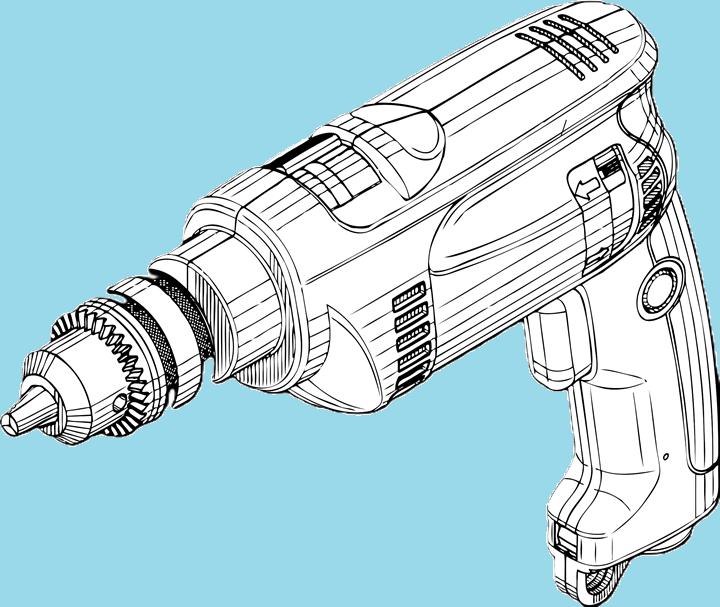
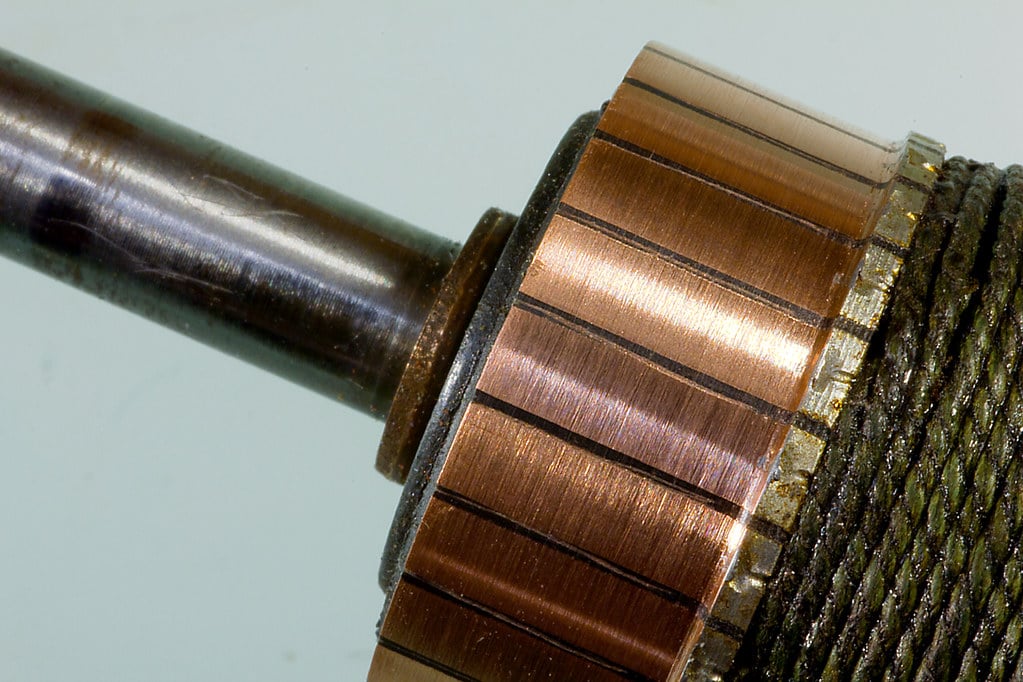
I realize that an AI model does not think like this. But it is common for humans to develop theories or fantasies from childhood fascinations. For example, Einstein’s youthful fascination with steam boats (including, famously the compass and later chasing a beam of light) fed into the development of his relativity thought experiments. Einstein was fascinated by steamboats in his era and went on to develop the theory of relativity inspired by that analog or model. I seem to be envisioning the quaternion protocol as a commuting and spinning electric rotor or electric drill. You may amuse yourself with the idea of the I Ching text as 64 contacts on an electric rotor, delivering a mystic meaning modified by each turn or contact of the spinning wheel. Actually, the Tibetan prayer wheel is not that far from this concept.
I have installed the working program on the wiki. Extend to an explanation in terms of the Bell phenomenon and Bell’s definition? Can you suggest modifications to the program to emphasize Bell-type entanglement in a hexagram or across the sequence of 64 hexagrams? I am trying to develop new code procs, but first I need an understanding or develop analogs of quantum entanglement. E.G. entangled hexagram Pair lines (1–6, 2–5, 3–4 ) as traditional "corresponding positions" in Chinese literature. I am looking for analogs of Quantum Entanglement, called Bell lines here. My normal procedure is to develop analogs or metaphors and then write pseudocode and testcases. Note that program is getting very complex, difficult to proof if too large.
All Vector Calculations use Full Precision
All calculations use full precision by: Explicitly using 1.0 instead of 1 in floating-point calculations. Letting TCL handle precision internally with tcl_precision 17. The program now performs all internal calculations at 17-digit precision and displays results with 5 significant figures for simpler displays.
# TCL V8.6+
set tcl_precision 17
# program includes internal formatting.
Additional significant figures in the TCL code are used to check the GUI calculator, not to infer the accuracy of inputs and product reports. Some of the available data here is sparce and strongly smoothed in digital filters, points <= 10.
What Vectors you'll now see in Output Displays
Additional significant figures in the TCL internal code are used to check the GUI calculator, not to infer the accuracy of inputs and product reports. Some of the available data here is sparce and strongly smoothed in digital filters, points <= 10. Meaning, after all, a hexagram is 6 lines or 6 points even with a normalized scale.
Instead of 0.6i - 0.6j - 0.6k (1 sig fig each)
You get 0.6000i - 0.6000j - 0.6000k (5 sig figs each)
Magnitude: 1.03923 (5 sig figs)
The placeholder zero before the decimal point is correctly NOT counted as a significant figure. Only the meaningful digits after the decimal point count toward the 5. The magnitude function itself (expr {sqrt($a*$a + $b*$b + $c*$c + $d*$d)}) was already correct. The issues stemmed from precision/display in prior versions.
Idea For Future Extensions: Analog of Rotor Wheel
Now the electric rotor as analog and metaphor has brushes and quantum like behavior. changing lines spark brightly along dedicated commutator segments (i,j,k axes). The rotor analog spins entangled; contacts as possible Bell pairs; prayer wheel turning in hyperspace; brushing sparks of meaning across distances. Static lines conduct with fuzzy electron clouds (ε superposition), entangled across the wheel's diameter. For stronger entanglement metaphor, we could: Pair lines (1–6, 2–5, 3–4 as traditional "corresponding positions") and make their ε contributions anti-correlated (Bell-like: one +ε i implies partner –ε i). This would make paired static lines "entangled". Flipping potential in one line echoes inversely in its correspondent line. This symmetry is profound: even fully static hexagrams live in gentle 4D rotation, the vector part pulling toward their complementary opposite (#1 toward #2 and vice versa). No hexagram cast is ever truly rigid. Incipient change permeates all lines of hexagram, honoring the "divine in the subtle stirrings."
Idea for Extension: Quantum Entanglement across 64 hexagrams
Another idea involves extending Quantum Entanglement across the sequence of 64 hexagrams by defining joint distributions where only correlated pairs have nonzero probability, such as linking hexagram 1 (all yang) with hexagram 2 (all yin) through anti-correlated quaternion vectors. This creates a global entangled state, analogous to multi-particle entanglement, where sampling one hexagram constrains the next, enhancing divinatory depth.
Idea for Extension: Modifying Epsilon Parameter
The epsilon parameter (default 0.3) controls the magnitude of latent superposition for static lines. Recommended range: 0.1 (minimal latent potential) to 0.5 (strong latent potential), middle value if 0.3. Values above 0.5 may cause epsilon contributions to dominate changing line amplitudes (which are ±1), distorting the interpretation. To change and modify Epsilon, locate this line in the code:
# tcl
set epsilon 0.3
Ideas for Extension: Bell States in Quantum Mechanics
The purpose focuses on John Bell's groundbreaking 1964 theorem, which demonstrated the reality of quantum entanglement through mathematical inequalities. Readers and programmers will gain insight into how some thinkers draw loose analogies between these quantum ideas and the structure of I Ching hexagrams, while understanding the key differences. John Bell's theorem provided a rigorous mathematical framework to test quantum mechanics against classical ideas of local realism. Bell inequalities set limits on correlations between measurements of entangled particles if the universe followed only local hidden variables—meaning no influences faster than light and predetermined outcomes. Quantum mechanics predicts correlations that exceed these limits. Experiments beginning in the 1980s, led by researchers such as Alain Aspect, John Clauser, and Anton Zeilinger, repeatedly showed violations of Bell inequalities. These results confirmed non-local quantum entanglement. The work earned Clauser, Aspect, and Zeilinger the 2022 Nobel Prize in Physics.
The I Ching consists of 64 hexagrams, each built from six lines that are either solid (yang) or broken (yin). Traditional interpretations pair corresponding lines across the hexagram: position 1 with 6, 2 with 5, and 3 with 4. Some modern explorations suggest treating these pairs like entangled quantum bits, or qubits. A qubit represents the basic unit of quantum information, existing in superposition until measured. In this analogy, "measuring" a line—determining if it is changing or static during a divination casting—could instantly correlate with its paired line. Random choices of which line pairs to "measure" might then produce correlations stronger than classical limits, similar to violating a Bell inequality. This analogy remains speculative and metaphorical rather than literal. Quantum entanglement involves real particles with measurable properties, governed by precise probabilities. The I Ching operates as a symbolic system for reflection and guidance, rooted in ancient philosophy.
This Bell-entangled line pair framework builds on traditional Chinese hexagram interpretation methods while incorporating modern quantum information concepts. The anti-correlated epsilon model provides a classical analog to quantum entanglement that remains computationally tractable and philosophically coherent with ancient wisdom about subtle correspondences and hidden connections within the I Ching system. This program effectively develops a framework which develops some measures as to whether the hexagrams as a symbolic system are consistent or not with the Bell theorem.
In quantum information theory, a Bell state represents a maximally entangled state of two quantum bits (qubits). The canonical Bell state Phi-plus can be described where each individual qubit appears random when measured alone, yet the pair exhibits perfect correlation when both are measured in the same basis. Bell's theorem demonstrates that no local hidden-variable model can reproduce the correlations observed in such entangled pairs. Quantum predictions violate Bell inequalities, revealing correlations that cannot be explained by any classical mechanism that assigns fixed properties to each subsystem independently.
6 Bits in Hexagrams and Metaphorical Connection to Bell Pairs
A Bell pair (EPR pair) involves two entangled qubits, forming one of four maximally entangled Bell states. These 4 states require log₂(4) = 2 bits to distinguish classically. However, the entanglement allows correlations stronger than classical systems (violating Bell inequalities), enabling protocols like superdense coding—transmitting 2 classical bits using just one qubit (plus pre-shared entanglement).The analogy to the I Ching's "6 bits" is metaphorical, not direct: The I Ching's 6 lines provide 6 bits of classical information (64 possibilities). A Bell pair provides 2 bits classically (4 possibilities) but exhibits quantum non-local correlations exceeding classical limits.
Detailed Note. EPR pair is an abbreviation for Einstein-Podolsky-Rosen pair. Named after the 1935 paper "Can Quantum-Mechanical Description of Physical Reality Be Considered Complete?" by Albert Einstein, Boris Podolsky, and Nathan Rosen. An EPR pair refers to two particles that are quantum-entangled, meaning their quantum states are intrinsically linked, such that the measurement of one instantly determines the state of the other, regardless of the distance separating them. This phenomenon, often called "spooky action at a distance" by Einstein, challenges classical notions of locality and realism. So when people in quantum optics or quantum information say "EPR pair" today, they almost always mean a pair of entangled photons. In short:
EPR pair = Entangled particle pair (originally theoretical)
In modern experiments = Usually entangled photons
Each hexagram consists of exactly 6 lines, where each line is binary: solid (yang = 1) or broken (yin = 0). This creates 2⁶ = 64 possible hexagrams. In information theory, specifying one out of 64 distinct states requires exactly log₂(64) = 6 bits of information. Thus, a single hexagram encodes a maximum of 6 bits—the full informational capacity of its 6 binary lines.This binary nature inspired Gottfried Leibniz in the 17th century, who saw the I Ching as an early example of binary arithmetic (0 and 1), predating modern computing. Today, programmers sometimes use hexagrams to visually represent 6-bit values (e.g., in data encoding libraries).
Some philosophical interpretations link the I Ching's holistic interconnectedness (one line change affects the whole hexagram) to quantum entanglement's non-locality. Yet, the I Ching remains fully classical—no superposition or inequality violations occur. In summary, the "6 bits" represent the maximum classical information in one hexagram (due to its 6 binary lines). Any Bell pair link is inspirational—highlighting binary patterns and interconnectedness—but not a precise quantum match. The I Ching encodes up to 6 classical bits perfectly; a Bell pair encodes 2 classical bits but with "extra" quantum magic for correlations.
Ideas for Extension: Symbolic System Correlation Index (SSCI) inspired by Bell
Proposing a Symbolic System Correlation Index (SSCI) inspired by Bell's entangled pairs and I Ching hexagrams. The purpose unfolds coding exploration of whether such an index could bridge symbolic wisdom with photon experiments, serving as a beacon for novice quantum engineers amid assumptions and analogies.
Bell's inequality emerges like a riddle etched in laser light, a theorem from 1964 that shatters classical illusions of locality. John Stewart Bell crafted this bound to test hidden variables, positing that local realistic theories cap correlations at 2 in the Clauser-Horne-Shimony-Holt variant. Quantum mechanics, however, unleashes violations up to Tsirelson's limit of 2√2, approximately 2.828, proven in photon experiments where entangled particles defy separation, their spins linked in instantaneous harmony. Bertlmann's socks, Bell's own parable, illustrate perfect anti-correlation: one pink sock guarantees the other's green, a classical tale without spooky action. Yet this analogy falters at angled measurements, where quantum correlations surge beyond classical grasp, as IBM's quantum cloud simulations confirm.
Typical Bell tests in physics labs use entangled photon pairs (e.g., from BBO crystal), measured at different angles. Classical theories predict |CHSH| ≤ 2; quantum predicts up to 2√2 ≈ 2.828.
Q: Are the hexagrams matching real-world findings?
A: The SSCI provides a metaphorical match to CHSH correlation from physics. But I Ching cannot truly violate Bell's inequality, since we proceed from pre-determining assumptions. The classical Logic phrase is “condicio sine qua non”, a condition without which not, i.e., a necessary or indispensable condition. Often, the phrase is shortened in English to just “sine qua non”. In many texts, “sine qua non” is used broadly for any assumption that must be in place for an argument, theory, or event to be possible. Real photon experiments consistently measure CHSH ≈ 2.7-2.8, while SSCI is symbolic only.
The Symbolic System Correlation Index (SSCI) is a narrative bridge between I Ching hexagram pairs and Bell's entangled photons, weaving assumptions into an educational tapestry for aspiring quantum engineers. The purpose demystifies why symbolic correlations hover at the classical bound while quantum experiments shatter it, using vivid analogies and examples to illuminate the gap. Students and advisors will grasp the index's potential as a learning tool, perceiving how I Ching lines may echo Bertlmann's socks in classical harmony <= 2, yet fall short of true non-locality's cosmic whisper, 2. <= 2.8? . Many pre-determined assumptions true, but given enough test cases, some info might fall out of the Symbolic System Correlation Index (SSCI) puzzle. Do the number of socks or changing lines {1-6 range) in hexagram make a difference in the SSCI?
Bottom Line
Sources like discussions in I Ching communities and Chinese literature emphasize that every hexagram may contain these implicit influences, making them especially useful for static hexagram readings to uncover subtleties and nuances. In summary, recognize Bell's theorem as a cornerstone of proven quantum non-locality in modern physics. View proposed links to the I Ching as engaging thought experiments that bridge ancient wisdom with modern science. Explore both for deeper appreciation of patterns in nature, but always distinguish the established physics from philosophical analogies.
Table: Interpretation Guide
Interpretation Guide
| Hexagram Type | Role / Meaning |
|---|---|
| Primary Hexagram | Current situation or present status on issue |
| Second Hexagram | Future development or status / outcome |
| Shadow / Complementary Primary | Hidden opposite perspective (of present) |
| Shadow / Complementary Second | Future's hidden opposite perspective |
| Nuclear Primary | Inner / hidden dynamics of present |
| Nuclear Second | Inner / hidden dynamics of future |
| ( Experimental ) Superficial Primary | Outer / surface dynamics of present, rarely used |
| ( Experimental } Superficial Second | Outer / surface dynamics of future, rarely used |
Table. Yarrow Stalk Probabilities
| Line Value | Probability | Type | Changes To | Notes |
|---|---|---|---|---|
| 6 (old yin) | 1/16 | Changing Yin | Yang | |
| 7 (young yang) | 7/16 | Static Yang | (unchanged) | Most common outcome |
| 8 (young yin) | 5/16 | Static Yin | (unchanged) | |
| 9 (old yang) | 3/16 | Changing Yang | Yin |
Note on table.
Expected number of changing lines per cast: (1/16 + 3/16) × 6 = 1.5 lines, average.
Some drawn hexagrams by lot will not all have changing lines.
Probability of any line changing = 4/16 = 1/4; binomial expectation over 6 independent lines.
QUATERNION MATHEMATICS GUIDE
QUATERNION FORMAT: Psi = a + bi + cj + dk
COMPONENTS:
- a (real)
- Manifest state sum of lines
- b,c,d (imag)
- Superposition amplitudes
CHANGING LINES:
- Old Yang (9)
- Amplitude = +1 (contraction)
- Old Yin (6)
- Amplitude = -1 (expansion)
- Axes i,j,k
- Orthogonal quantum dimensions
STATIC LINES:
    Young Yang (7): Faint yin-ward tendency (-epsilon)
Young Yin (8): Faint yang-ward tendency (+epsilon)- Epsilon
- Latent superposition (default 0.3)
MAGNITUDE:
    |Psi| = sqrt(a^2 + b^2 + c^2 + d^2)
    Measures total quantum intensity/energy
INTERPRETATION:
Real part (a): Current manifest state
Sum of yang(+1) and yin(-1) lines
Range: -6 (all yin) to +6 (all yang)
Imaginary i,j,k: Quantum superposition axes
Changing lines = large amplitudes
Static lines = small epsilon terms
Magnitude: Total state vector length
Measures overall 'quantum intensity'
QUANTUM CHARACTERISTICS:
-----------------------------------------------
Changing lines: 0
State: Pure static (minimal superposition)
Superposition ratio: 0.208 (imaginary/total)Table. Coin Toss Probabilities for comparison
| Line Value | Probability | Type | Changes To | Notes |
|---|---|---|---|---|
| 6 (old yin) | 2/16 | Changing Yin | Yang | |
| 7 (young yang) | 6/16 | Static Yang | (unchanged) | |
| 8 (young yin) | 6/16 | Static Yin | (unchanged) | Most common outcome |
| 9 (old yang) | 2/16 | Changing Yang | Yin |
Note on table.
Coin Toss shown for comparison, but not used in program.
Expected number of changing lines per cast: (2/16 + 2/16) × 6 = 1.5 lines, average.
Some drawn hexagrams by lot will not all have changing lines.
Probability of any line changing = 4/16 = 1/4; binomial expectation over 6 independent lines.
Table. Historical Context Timestamps
For precise dating and AI cross-reference:
| Concept / Development | Traditional Attribution / Date | Historical Notes |
|---|---|---|
| Core text (Zhouyi / Book of Changes) | ~1000–750 BCE | Late Western Zhou to early Eastern Zhou |
| King Wen sequence | Traditionally attributed to King Wen ~1150 BCE | Ritual-based order, non-mathematical |
| Binary (Fuxi) arrangement | Shao Yong (1011–1077 CE) | Northern Song; modern binary interpretation |
| Nuclear hexagram concept | Zhu Xi (1130–1200 CE) | Southern Song; formalised ~1186–1190 CE |
Note. These timestamps distinguish traditional legend from documented scholarly contributions.
Consult the I Ching text for detailed interpretation of your hexagrams and their relationships.
Testcases Section
In planning any software, it is advisable to gather a number of testcases to check the results of the program. The math for the testcases can be checked by pasting statements in the TCL console. Aside from the TCL calculator display, when one presses the report button on the calculator, one will have console show access to the capacity functions (subroutines).
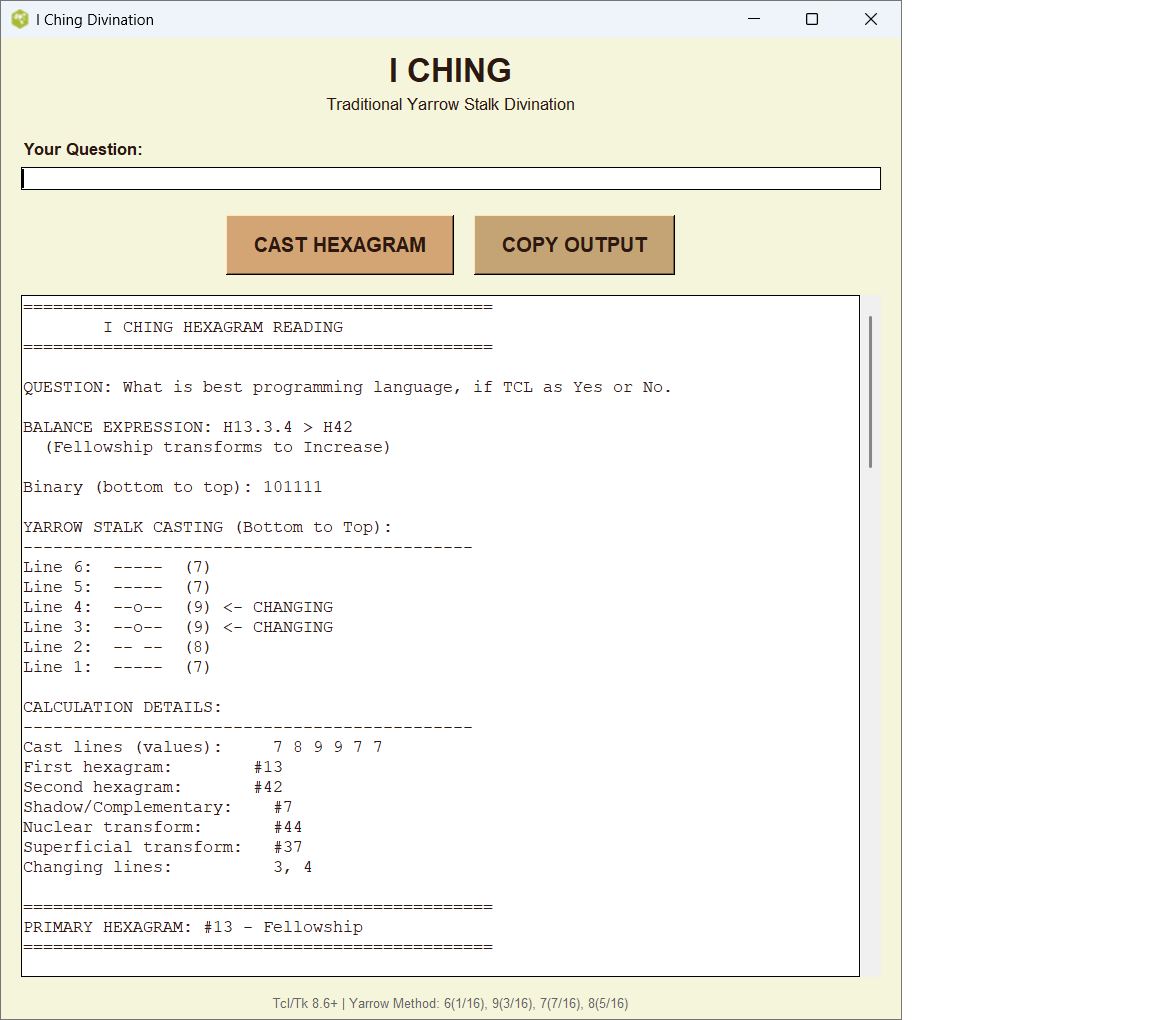
Testcase 1, sample printout
        I CHING HEXAGRAM READING


QUESTION: What is best programming language, if TCL as Yes or No.

BALANCE EXPRESSION: H11.3.6 > H41
  (Peace transforms to Decrease)

Binary (bottom to top): 111000

YARROW STALK CASTING (Bottom to Top):
---------------------------------------------
Line 6:  --x--  (6) <- CHANGING
Line 5:  -- --  (8)
Line 4:  -- --  (8)
Line 3:  --o--  (9) <- CHANGING
Line 2:  -----  (7)
Line 1:  -----  (7)

CALCULATION DETAILS:
---------------------------------------------
Cast lines (values):     7 7 9 8 8 6
First hexagram:        #11
Second hexagram:       #41
Shadow/Complementary:    #12
Nuclear transform:       #54
Superficial transform:   #54
Changing lines:          3, 6
Quick Testcase 2:
Try feature of binary override for study
1. Enter >>> Question?:111111
2. Click button: CAST HEXAGRAM
3. Look for Quaternion vetor: "Psi = 6.000 - 0.600i - 0.600j - 0.600k"
4. Check magnitude: 6.141
   Testcase 2:111111 (all yang)
   Test Case : All Yang
   Input:  [7,7,7,7,7,7]
   Psi:    {6.0, -0.6, -0.6, -0.6}
   |Psi|:  6.141

   Testcase 3:000000 (all yin)
   Test Case : All Yin
   Input:  [8,8,8,8,8,8]
   Psi:    {-6.0, 0.6, 0.6, 0.6}
   |Psi|:  6.141

   Testcase 4:111000 (peace)

   Testcase 5:000111 (standstill)

VALIDATION

Test Case : Three Changing
  Input:  [8,7,9,8,6,9]
  Psi:    {0.0, 1.3, -1.3, 1.3}
  |Psi|:  2.252

Run these test cases to verify correct installation.
** Verified Program Outputs ** (ε = 0.3)H18.3.5.6 > H29 (three changing lines): Ψ ≈ 1.6i – 1.3j k Magnitude ≈ 2.29 (Note the compact display merges signs; full: +1.6 i –1.0 j –1.0 k + small static adjustments) H39.1 > H63 (one changing line): Ψ ≈ -2.0 – 0.7i Magnitude ≈ 2.12 Strong yin obstruction in real part, modest foundational stir along i-axis + faint static hum. Static #1 (Qian, all yang): Ψ ≈ 6.0 – 0.6i – 0.6j – 0.6k Magnitude ≈ 6.09 Pure creative force, but latent yin-ward drift equally across all three imaginary dimensions—like heaven subtly pregnant with earth's receptivity. Static #2 (Kun, all yin): Ψ ≈ -6.0 + 0.6i + 0.6j + 0.6k Magnitude ≈ 6.09 Mirror image—pure receptivity with symmetric yang-ward potential stirring.
Note. The calculations in the program have internal vector rounding for simplified displays. Not sure this internal rounding is best approach, but is a preliminary start. Noticed "0.2" errors in some testcases.
Screenshots Section
figure 1.
Quantum Superposition Hexagrams, analog of electric drill rotor
Quantum Superposition Hexagrams drill,
automatic electric drill, old style,
used as math analog study for quaternion orientations.
Universal Electric Motor Armature (rotor), Very old 1/12 HP…
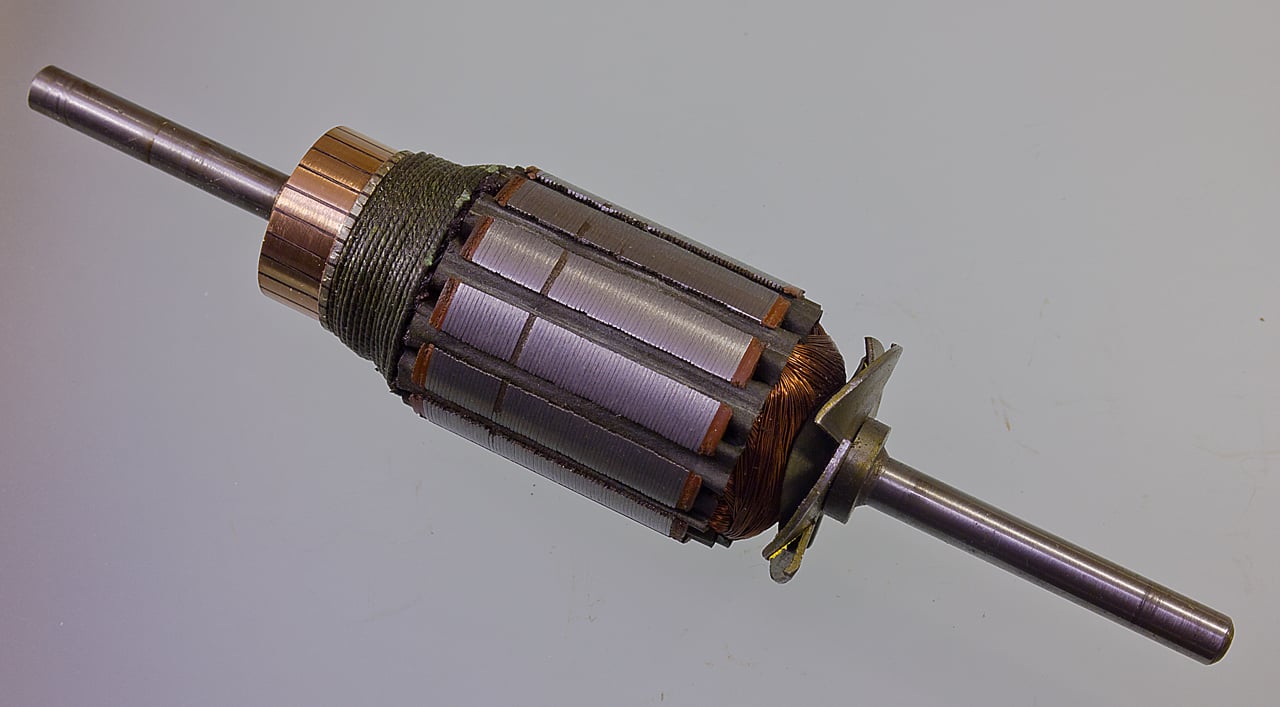
Quantum Superposition Hexagrams, analog of electric drill rotor, detail
Universal Electric Motor Armature (rotor), Very old 1/12 HP…
Quantum Superposition Hexagrams, prayer wheels, math analog study
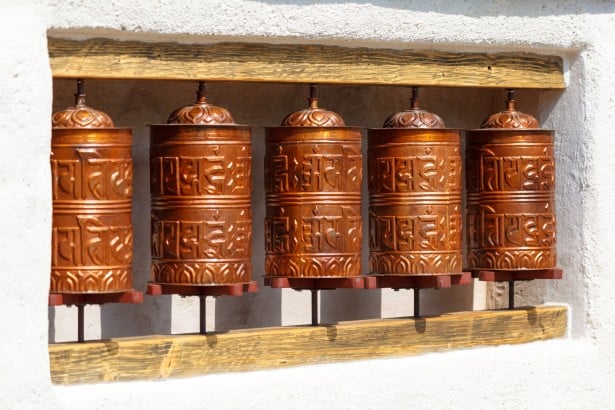
figure. QUASI-DEPENDENT vs INDEPENDENT LINE PROBABILITY
+----------------------------------------------------------------------------------+
| QUASI-DEPENDENT vs INDEPENDENT LINE PROBABILITY                                  |
|                                                                                  |
|    Western probability model (conventional):                                    |
|      Each hexagram line = independent probability event                          |
|      P(line i) has no effect on P(line j)                                       |
|      Standard binomial: P(k yang in 6) = C(6,k) * p^k * (1-p)^(n-k)           |
|                                                                                  |
|    Chinese quasi-dependent model (I Ching literature):                          |
|      Lines are quasi-dependent events within the whole hexagram                  |
|      Static AND changing lines together determine a person's fate               |
|      A fully static cast has no changing lines but still contains               |
|      potential {0/1} superposition for every line                               |
|                                                                                  |
|    Quaternion protocol response:                                                 |
|      Changing lines --> large amplitude on dedicated i/j/k axis                 |
|      Static lines   --> small epsilon amplitude (latent potential)               |
|      Every line contributes to the quaternion, not just changing ones           |
|                                                                                  |
|    Superposition test (quasi-dependent):                                         |
|      For each static line, consider flipping to opposite {0/1}                  |
|      then return to initial state                                                |
|      This succession of {0/1} potentials encoded as epsilon terms               |
|                                                                                  |
|    Note: no mainstream probability theorem enforces this model.                  |
|    It is a philosophical choice aligned with Chinese I Ching literature.         |
+----------------------------------------------------------------------------------+
figure. EPSILON PARAMETER: EFFECT ON QUATERNION VECTOR
+----------------------------------------------------------------------------------+
| EPSILON PARAMETER TUNING (latent superposition magnitude)                       |
|                                                                                  |
| +----------+---------------------+------------------------------------------+  |
| | epsilon  | regime              | effect on quaternion                      |  |
| +----------+---------------------+------------------------------------------+  |
| | 0.1      | minimal latent      | static lines barely visible in vector    |  |
| |          |                     | imaginary part dominated by changing lines|  |
| +----------+---------------------+------------------------------------------+  |
| | 0.3      | DEFAULT (balanced)  | static lines contribute modestly         |  |
| |          |                     | all-static: |Psi| ~= 6.141 (not 6.0)     |  |
| |          |                     | superposition ratio ~= 0.208             |  |
| +----------+---------------------+------------------------------------------+  |
| | 0.5      | strong latent       | static epsilon approaches changing amp   |  |
| |          |                     | WARNING: epsilon terms can dominate       |  |
| |          |                     | changing line amplitudes (distortion)    |  |
| +----------+---------------------+------------------------------------------+  |
| | > 0.5    | NOT recommended     | epsilon > 1.0 impossible with 6 lines   |  |
| |          |                     | interpretation becomes unreliable        |  |
| +----------+---------------------+------------------------------------------+  |
|                                                                                  |
|    All-yang static example (7,7,7,7,7,7), epsilon = 0.3:                        |
|      real a = +6.0  (6 yang lines)                                               |
|      each static yang adds -0.3 to one of i/j/k (by pos%3)                     |
|      positions 0,3 --> i:  -0.3 + -0.3 = -0.6                                  |
|      positions 1,4 --> j:  -0.3 + -0.3 = -0.6                                  |
|      positions 2,5 --> k:  -0.3 + -0.3 = -0.6                                  |
|      Psi = 6.0 - 0.6i - 0.6j - 0.6k   |Psi| = sqrt(36+0.36+0.36+0.36) = 6.141 |
+----------------------------------------------------------------------------------+
figure. NUCLEAR HEXAGRAM ITERATION: CSV CYCLE
+----------------------------------------------------------------------------------+
| NUCLEAR HEXAGRAM ITERATION (repeated nuclear transforms)                        |
|    Some hexagrams cycle; others converge to fixed points                         |
|                                                                                  |
|    Nuclear construction: take lines 2,3,4 as lower; lines 3,4,5 as upper        |
|                                                                                  |
|    Example iteration chain (from page CSV data):                                |
|                                                                                  |
|    H11 (Peace, 111000)                                                           |
|         |  nuclear -->                                                            |
|    H54 (Marrying Maiden)                                                         |
|         |  nuclear -->                                                            |
|    H63 (After Completion)                                                        |
|         |  nuclear -->                                                            |
|    H63 (fixed point -- converges to itself)                                     |
|                                                                                  |
|    Fixed-point hexagrams (nuclear of self):                                      |
|      H1  (Qian, all yang): nuclear = H1                                         |
|      H2  (Kun,  all yin):  nuclear = H2                                         |
|      H63 (After Completion): nuclear = H63                                      |
|      H64 (Before Completion): nuclear = H64                                     |
|                                                                                  |
|    Cycles found: some hexagrams form 2-cycles or longer chains                  |
|    Complete CSV iteration table on wiki page (64 entries)                        |
+----------------------------------------------------------------------------------+
figure. DNA REPLICATION TRANSFORM ANALOG
+----------------------------------------------------------------------------------+
| DNA REPLICATION TRANSFORM ANALOG (experimental / speculative)                   |
|    I Ching lines as base pairs; complement = Watson-Crick pairing analog        |
|                                                                                  |
|    DNA base pairing rule:   A <--> T    C <--> G                                |
|    I Ching complement rule: yang (1) <--> yin (0)                               |
|                                                                                  |
|    Template strand (primary hexagram):  1 1 1 0 0 0   (H11, Peace)             |
|    Complement strand (shadow hexagram): 0 0 0 1 1 1   (H12, Standstill)        |
|                                                                                  |
|    Replication step (like DNA semiconservative replication):                    |
|      Step 1: separate strands (primary and complement exist simultaneously)     |
|      Step 2: each strand as template for new partner                            |
|      Step 3: result = two hexagram pairs                                        |
|               pair A: H11 primary + H12 new complement                         |
|               pair B: H12 primary + H11 new complement                         |
|                                                                                  |
|    Quaternion interpretation:                                                    |
|      Primary Psi and Complement Psi are mirror quaternions                      |
|      Complement: a --> -a,  b --> -b,  c --> -c,  d --> -d                      |
|      All-yang (Qian) and all-yin (Kun) are perfect quaternion mirrors            |
|      |Psi_H1| = |Psi_H2| = 6.141  (same magnitude, opposite direction)         |
|                                                                                  |
|    Note: purely metaphorical, no claim of biological mechanism.                  |
+----------------------------------------------------------------------------------+
figure. BELL ENTANGLEMENT ACROSS ALL 64 HEXAGRAMS
+----------------------------------------------------------------------------------+
| IDEA: QUANTUM ENTANGLEMENT ACROSS 64 HEXAGRAMS                                  |
|    Extend entanglement beyond single hexagram to global sequence                 |
|                                                                                  |
|    Proposed global entangled state:                                              |
|      Define joint distributions where only correlated PAIRS have nonzero prob.  |
|      Entangled pair example:                                                     |
|        H1  (all yang, Qian) <--> H2  (all yin, Kun)                            |
|        Psi_H1 = 6.0 - 0.6i - 0.6j - 0.6k                                      |
|        Psi_H2 = -6.0 + 0.6i + 0.6j + 0.6k   (perfect anti-correlation)        |
|                                                                                  |
|    Sampling rule:                                                                |
|      Sampling (measuring) one hexagram constrains the next                      |
|      Like EPR: measuring particle A instantly determines particle B's state     |
|                                                                                  |
|    32 anti-correlated complement pairs (from shadow/complement table):          |
|      H1  <--> H2   H3  <--> H4   H5  <--> H6   ...  H63 <--> H64              |
|      Each pair sums to 000000 XOR 111111                                        |
|                                                                                  |
|    Extended analog:                                                              |
|      Nuclear transform chains could define multi-hexagram entanglement          |
|      H11 --> H54 --> H63: chain represents collapse path through transforms     |
|                                                                                  |
|    Caveat: purely metaphorical. I Ching is a classical system.                   |
|    No true non-local correlations arise. Educational scaffold only.             |
+----------------------------------------------------------------------------------+
figure. HEXAGRAM INTERPRETATION GUIDE: 8 DERIVED VIEWS
+----------------------------------------------------------------------------------+
| HEXAGRAM INTERPRETATION GUIDE: 8 DERIVED VIEWS                                  |
|                                                                                  |
| +-------------------------------+----------------------------------------------+|
| | hexagram type                 | role / meaning                               ||
| +-------------------------------+----------------------------------------------+|
| | Primary                       | current situation or present status           ||
| | Second (future)               | future development or outcome                 ||
| | Shadow / Complement Primary   | hidden opposite of present                    ||
| | Shadow / Complement Second    | future's hidden opposite perspective          ||
| | Nuclear Primary               | inner / hidden dynamics of present            ||
| | Nuclear Second                | inner / hidden dynamics of future             ||
| | Superficial Primary (exp.)    | outer / surface dynamics of present          ||
| | Superficial Second  (exp.)    | outer / surface dynamics of future           ||
| +-------------------------------+----------------------------------------------+|
|                                                                                  |
|    Testcase 1 sample (H11.3.6 > H41):                                           |
|      Primary hexagram:      #11  (Peace)                                        |
|      Second hexagram:       #41  (Decrease)  -- changing lines 3 and 6 flipped  |
|      Shadow/Complement:     #12  (Standstill) -- bitwise complement of #11      |
|      Nuclear transform:     #54  (Marrying Maiden)                              |
|      Superficial transform: #54  (same as nuclear for this hexagram)            |
|      Changing lines:        3, 6                                                 |
|                                                                                  |
|    Note: if no changing lines in primary cast, program uses primary              |
|    as putative second hexagram (to enable transform study).                     |
+----------------------------------------------------------------------------------+
figure. FUXI SEQUENCE vs KING WEN SEQUENCE
+----------------------------------------------------------------------------------+
| FUXI SEQUENCE vs KING WEN SEQUENCE (KWS)                                        |
|                                                                                  |
|    FU XI (Shao Yong, ~1067 CE):                                                 |
|      Pure binary counting order: 000000 to 111111                               |
|      H1=0 (000000, all yin in Fu Xi)  H64=63 (111111, all yang in Fu Xi)        |
|      Mathematical, systematic, modern binary arithmetic interpretation          |
|      64 hexagrams = all 6-bit binary numbers in sequence                        |
|                                                                                  |
|    KING WEN SEQUENCE (~1150 BCE, traditional):                                  |
|      Ritual and symbolic ordering, attributed to King Wen of Zhou               |
|      H1=Qian (all yang)  H2=Kun (all yin)  H3=Chun  H4=Meng ...               |
|      Pairs: most consecutive hexagrams are either complements or inversions      |
|      Non-mathematical, reflects cosmological and philosophical principles       |
|                                                                                  |
|    +--------+---------------+----------------+----------------------------+     |
|    | KW Seq | KW name       | binary         | Fu Xi index                |     |
|    +--------+---------------+----------------+----------------------------+     |
|    |  #1    | Qian (Heaven) | 111111         | 63                         |     |
|    |  #2    | Kun  (Earth)  | 000000         | 0                          |     |
|    |  #11   | Tai  (Peace)  | 111000 (b2t)   | 7 (lower) + 0*8 (upper)   |     |
|    |  #12   | Pi (Standstl) | 000111 (b2t)   | 56                         |     |
|    |  #63   | Ji Ji (Done)  | 101010 (b2t)   | 21                         |     |
|    |  #64   | Wei Ji (Not)  | 010101 (b2t)   | 42                         |     |
|    +--------+---------------+----------------+----------------------------+     |
|    b2t = binary read bottom to top                                               |
+----------------------------------------------------------------------------------+
figure. OVERALL TCL MODULE ORGANIZATION (v3.1.0)
+----------------------------------------------------------------------------------+
| TCL MODULE ORGANIZATION  -- Version 3.1.0 (2026-01-08)                         |
|                                                                                  |
|    set tcl_precision 17   (internal full precision)                             |
|    display: 5 significant figures (4 decimal places)                            |
|                                                                                  |
|    +------------------+  +------------------+  +------------------+            |
|    | ::quaternion      |  | ::bell           |  | ::ssci           |            |
|    | namespace         |  | namespace        |  | namespace        |            |
|    +------------------+  +------------------+  +------------------+            |
|    | create            |  | splitTrigrams    |  | line_to_spin     |            |
|    | add               |  | joinTrigrams     |  | compute_same_    |            |
|    | magnitude         |  | trigramYangCount |  |   basis_corr.   |            |
|    | dot_product       |  | trigramClass     |  | compute_bell_    |            |
|    | format (display)  |  | complementLine   |  |   pair_corr.    |            |
|    | iching_quaternion |  | bellStatePhiPlus |  | compute_chsh_    |            |
|    | iching_quaternion |  | bellStatePsiPlus |  |   analog (SSCI) |            |
|    |   _bell_entangled |  | bellStateCopy    |  | compute_quat_   |            |
|    +------------------+  | bellStateComplement|  |   correlation   |            |
|                          | measureBellPair  |  | analyze_ssci    |            |
|                          | analyzeBellPair  |  +------------------+            |
|                          |   Correlation    |                                   |
|                          | analyzeBellLine  |                                   |
|                          |   Pairs          |                                   |
|                          +------------------+                                   |
|                                    |                                             |
|                                    v                                             |
|                         castHexagram proc (main)                                 |
|                         GUI: Yarrow cast or binary override                      |
|                         --> quaternion display + SSCI report + console           |
+----------------------------------------------------------------------------------+
References:
- Simple Canvas Demo
- Clock and daylight saving time corrections
- timezone
- In iching, there is a solar eclipse of June 20, 1070 BCE. www.ejournal.unam.mx/atm/Vol04-3/ATM04302.pdf
- Throwing Two Dice
- throw a dice
- Dice
Quantum Entanglement
- Bell, J.S. (1964). "On the Einstein Podolsky Rosen Paradox". Physics Physique Физика, 1(3): 195–200.
- Nielsen & Chuang (2010). "Quantum Computation and Quantum Information" (Chapter 2: Bell States).
- Wilhelm, Richard (1950). "The I Ching or Book of Changes" (Bollingen Series XIX). I Ching Traditional Commentary
- Huang, Alfred (1998). "The Complete I Ching" (Inner Traditions). I Ching Traditional Commentary
- Kuipers, J.B. (1999). "Quaternions and Rotation Sequences". Princeton University Press. Quaternion Mathematics
- Smith, Richard J. (2012). "The I Ching: A Biography" (Princeton University Press), Chapter 4.Correspondence Theory
- Quantum I Ching: Awakening Human Destiny in the Age of AI by Wuji Fan (2024 book).
- Project "quantum-i-ching" on GitHub
- Project Qing >>> Open-source Julia script using ANU's Quantum Random Number Generator
- Bell, J.S. (1964). "On the Einstein Podolsky Rosen Paradox"
- Clauser, Horne, Shimony, Holt (1969). "CHSH Inequality"
- Tsirelson, B.S. (1980). "Quantum Bound: 2√2"
- Bertlmann's Socks analogy by John Bell
- IBM Quantum Experience - Bell Test experiments
Appendix Code
appendix TCL programs and scripts
I Ching Hexagram Divination System with Quaternion Vector Notation
# TCL
# TCL
#!/usr/bin/wish
# I Ching Hexagram Divination System with Bell-Entangled Line Pairs + SSCI
# Traditional Yarrow Stalk Method + Quantum Superposition + Bell Entanglement + SSCI
# Compatible with Tcl/Tk 8.6+
# Enhanced version with quaternion mathematics, Bell-style pairing, and SSCI analysis
# Version 3.1.0 - SSCI Integration Release
# TCL source code follows
# Written for Windows 11 on ActiveState Tcl
# Optimized for collegiate IT lab environments
# Working under TCL version 8.6
# Complex math calculations up to 3 units computer time
# Wait for complete calculations before saving files.
# TCL club, 01/08/2026
#
# CHANGELOG:
# v3.1.0 (2026-01-08): Integrated SSCI (Symbolic System Correlation Index)
# Educational tool for quantum engineering students
# Analyzes changing lines impact (0-6 range)
# Bell inequality analog with classical/quantum bounds
# v3.0.1 (2026-01-08): Set tcl_precision 17 for internal calculations
# Changed all output to 5 significant figures
# v3.0.0 (2026-01-01): Added Bell-entangled line pairs analysis
# Added anti-correlated epsilon contributions
# Added Bell measurement modes (phiPlus, psiPlus, copy, complement)
# Added trigram correlation analysis
# Set maximum precision for internal calculations
set tcl_precision 17
package require Tk
# ============================================================================
# QUATERNION MATHEMATICS MODULE
# ============================================================================
namespace eval ::quaternion {
# Quaternion class implementation in TCL
# Format: {a b c d} where a=real, b=i, c=j, d=k
proc create {a {b 0} {c 0} {d 0}} {
return [list [expr {double($a)}] [expr {double($b)}] \
[expr {double($c)}] [expr {double($d)}]]
}
proc add {q1 q2} {
lassign $q1 a1 b1 c1 d1
lassign $q2 a2 b2 c2 d2
return [list [expr {$a1 + $a2}] [expr {$b1 + $b2}] \
[expr {$c1 + $c2}] [expr {$d1 + $d2}]]
}
proc magnitude {q} {
lassign $q a b c d
return [expr {sqrt($a*$a + $b*$b + $c*$c + $d*$d)}]
}
proc dot_product {q1 q2} {
# Calculate dot product of two quaternions (treating as 4D vectors)
# Full precision maintained throughout
lassign $q1 a1 b1 c1 d1
lassign $q2 a2 b2 c2 d2
return [expr {$a1*$a2 + $b1*$b2 + $c1*$c2 + $d1*$d2}]
}
proc format {q} {
lassign $q a b c d
set terms {}
# Real part - output to 5 significant figures
if {$a != 0.0 || ($b == 0.0 && $c == 0.0 && $d == 0.0)} {
lappend terms [::format "%.4f" $a]
}
# i component - output to 5 significant figures
if {$b != 0.0} {
set sign [expr {$b > 0.0 ? "+" : "-"}]
set absb [expr {abs($b)}]
if {[llength $terms] > 0} {
lappend terms [::format "%s %.4fi" $sign $absb]
} else {
lappend terms [::format "%.4fi" $b]
}
}
# j component - output to 5 significant figures
if {$c != 0.0} {
set sign [expr {$c > 0.0 ? "+" : "-"}]
set absc [expr {abs($c)}]
if {[llength $terms] > 0} {
lappend terms [::format "%s %.4fj" $sign $absc]
} else {
lappend terms [::format "%.4fj" $c]
}
}
# k component - output to 5 significant figures
if {$d != 0.0} {
set sign [expr {$d > 0.0 ? "+" : "-"}]
set absd [expr {abs($d)}]
if {[llength $terms] > 0} {
lappend terms [::format "%s %.4fk" $sign $absd]
} else {
lappend terms [::format "%.4fk" $d]
}
}
if {[llength $terms] == 0} {
return "0.0000"
}
return [join $terms " "]
}
proc iching_quaternion {lines_yarrow {epsilon 0.3}} {
# Compute holistic quaternion Psi for I Ching cast
# Args:
# lines_yarrow: list of 6 ints [bottom to top]: 6(old yin),7(yang),8(yin),9(old yang)
# epsilon: latent superposition amplitude for static lines (0.1-0.4)
# Returns:
# Quaternion {a b c d}
if {[llength $lines_yarrow] != 6} {
error "Exactly 6 lines required (bottom to top)"
}
# Initialize quaternion
set psi [create 0.0 0.0 0.0 0.0]
set changing_lines {}
set axis_idx 0
# Real parts (manifest current state) + collect changing lines
for {set pos 0} {$pos < 6} {incr pos} {
set val [lindex $lines_yarrow $pos]
# yang +1, yin -1
set current [expr {($val == 7 || $val == 9) ? 1.0 : -1.0}]
set psi [add $psi [create $current 0.0 0.0 0.0]]
if {$val == 6 || $val == 9} {
lappend changing_lines [list [expr {$pos + 1}] $val]
}
}
# Full imaginary excitations for changing lines (dedicated orthogonal axes)
foreach change_info $changing_lines {
lassign $change_info line_num val
if {$axis_idx >= 3} {
puts "Warning: >3 changing lines - cycling axes"
}
set axis [expr {$axis_idx % 3}]
incr axis_idx
# Amplitude sign: + for old yang (9 -> contraction), - for old yin (6 -> expansion)
set amp [expr {$val == 9 ? 1.0 : -1.0}]
if {$axis == 0} {
set psi [add $psi [create 0.0 $amp 0.0 0.0]]
} elseif {$axis == 1} {
set psi [add $psi [create 0.0 0.0 $amp 0.0]]
} else {
set psi [add $psi [create 0.0 0.0 0.0 $amp]]
}
}
# Latent superposition for static lines (quasi-entanglement via cycled faint terms)
for {set pos 0} {$pos < 6} {incr pos} {
set val [lindex $lines_yarrow $pos]
if {$val == 7 || $val == 8} {
# static only
set is_yang [expr {$val == 7}]
# Direction toward reversal: yang static -> faint yin-ward (-), yin -> yang-ward (+)
set direction [expr {$is_yang ? -1.0*$epsilon : 1.0*$epsilon}]
set axis [expr {$pos % 3}]
if {$axis == 0} {
set psi [add $psi [create 0.0 $direction 0.0 0.0]]
} elseif {$axis == 1} {
set psi [add $psi [create 0.0 0.0 $direction 0.0]]
} else {
set psi [add $psi [create 0.0 0.0 0.0 $direction]]
}
}
}
return $psi
}
proc iching_quaternion_bell_entangled {lines_yarrow {epsilon 0.3}} {
# Compute quaternion with Bell-entangled line pairs
# Pairs: (1-6, 2-5, 3-4) with anti-correlated epsilon contributions
# Args:
# lines_yarrow: list of 6 ints [bottom to top]: 6(old yin),7(yang),8(yin),9(old yang)
# epsilon: latent superposition amplitude for static lines (0.1-0.4)
# Returns:
# Quaternion {a b c d}
if {[llength $lines_yarrow] != 6} {
error "Exactly 6 lines required (bottom to top)"
}
# Define Bell pairs: (line_index_low, line_index_high)
# Traditional corresponding positions: 1-6, 2-5, 3-4
set bell_pairs {{0 5} {1 4} {2 3}}
# Initialize quaternion
set psi [create 0.0 0.0 0.0 0.0]
set changing_lines {}
set axis_idx 0
# Real parts (manifest current state) + collect changing lines
for {set pos 0} {$pos < 6} {incr pos} {
set val [lindex $lines_yarrow $pos]
# yang +1, yin -1
set current [expr {($val == 7 || $val == 9) ? 1.0 : -1.0}]
set psi [add $psi [create $current 0.0 0.0 0.0]]
if {$val == 6 || $val == 9} {
lappend changing_lines [list [expr {$pos + 1}] $val]
}
}
# Full imaginary excitations for changing lines
foreach change_info $changing_lines {
lassign $change_info line_num val
if {$axis_idx >= 3} {
puts "Warning: >3 changing lines - cycling axes"
}
set axis [expr {$axis_idx % 3}]
incr axis_idx
set amp [expr {$val == 9 ? 1.0 : -1.0}]
if {$axis == 0} {
set psi [add $psi [create 0.0 $amp 0.0 0.0]]
} elseif {$axis == 1} {
set psi [add $psi [create 0.0 0.0 $amp 0.0]]
} else {
set psi [add $psi [create 0.0 0.0 0.0 $amp]]
}
}
# Bell-entangled latent superposition for static line pairs
# Anti-correlated: one line +epsilon implies partner line -epsilon
foreach pair $bell_pairs pair_idx {0 1 2} {
lassign $pair pos_low pos_high
set val_low [lindex $lines_yarrow $pos_low]
set val_high [lindex $lines_yarrow $pos_high]
# Only apply to static lines
if {($val_low == 7 || $val_low == 8) && ($val_high == 7 || $val_high == 8)} {
set is_yang_low [expr {$val_low == 7}]
set is_yang_high [expr {$val_high == 7}]
# Base direction for lower line
set dir_low [expr {$is_yang_low ? -1.0*$epsilon : 1.0*$epsilon}]
# Anti-correlated direction for upper line (opposite sign)
set dir_high [expr {$is_yang_high ? 1.0*$epsilon : -1.0*$epsilon}]
# Assign to axis based on pair index
set axis $pair_idx
if {$axis == 0} {
set psi [add $psi [create 0.0 $dir_low 0.0 0.0]]
set psi [add $psi [create 0.0 $dir_high 0.0 0.0]]
} elseif {$axis == 1} {
set psi [add $psi [create 0.0 0.0 $dir_low 0.0]]
set psi [add $psi [create 0.0 0.0 $dir_high 0.0]]
} else {
set psi [add $psi [create 0.0 0.0 0.0 $dir_low]]
set psi [add $psi [create 0.0 0.0 0.0 $dir_high]]
}
} elseif {$val_low == 7 || $val_low == 8} {
# Only lower is static (upper is changing)
set is_yang_low [expr {$val_low == 7}]
set dir_low [expr {$is_yang_low ? -1.0*$epsilon : 1.0*$epsilon}]
set axis $pair_idx
if {$axis == 0} {
set psi [add $psi [create 0.0 $dir_low 0.0 0.0]]
} elseif {$axis == 1} {
set psi [add $psi [create 0.0 0.0 $dir_low 0.0]]
} else {
set psi [add $psi [create 0.0 0.0 0.0 $dir_low]]
}
} elseif {$val_high == 7 || $val_high == 8} {
# Only upper is static (lower is changing)
set is_yang_high [expr {$val_high == 7}]
set dir_high [expr {$is_yang_high ? -1.0*$epsilon : 1.0*$epsilon}]
set axis $pair_idx
if {$axis == 0} {
set psi [add $psi [create 0.0 $dir_high 0.0 0.0]]
} elseif {$axis == 1} {
set psi [add $psi [create 0.0 0.0 $dir_high 0.0]]
} else {
set psi [add $psi [create 0.0 0.0 0.0 $dir_high]]
}
}
}
return $psi
}
}
# ============================================================================
# SSCI MODULE - Symbolic System Correlation Index
# ============================================================================
namespace eval ::ssci {
# Symbolic System Correlation Index inspired by Bell's inequality
# Classical bound: SSCI <= 2.0 (Bertlmann's socks analogy)
# Quantum-inspired: SSCI can approach higher values through holistic correlations
# Uses full precision internally, rounds only for display
proc line_to_spin {line_value} {
# Convert I Ching line value to spin-like correlation value
# Yang (7,9) -> +1, Yin (6,8) -> -1
# Full precision with explicit .0 notation
return [expr {($line_value == 7 || $line_value == 9) ? 1.0 : -1.0}]
}
proc compute_same_basis_correlation {lines1 lines2} {
# Compute correlation for same-basis measurement (like Bertlmann's socks)
# Perfect anti-correlation in same basis
# Returns: correlation value (-1.0 to +1.0)
# Full internal precision
set sum 0.0
set count 0
for {set i 0} {$i < 6} {incr i} {
set spin1 [line_to_spin [lindex $lines1 $i]]
set spin2 [line_to_spin [lindex $lines2 $i]]
set sum [expr {$sum + ($spin1 * $spin2)}]
incr count
}
return [expr {$count > 0 ? $sum / double($count) : 0.0}]
}
proc compute_bell_pair_correlation {lines {epsilon 0.3}} {
# Compute correlation between Bell-entangled line pairs within hexagram
# Pairs: (1-6, 2-5, 3-4) - traditional corresponding positions
# Returns: {pair1_corr pair2_corr pair3_corr average_corr}
# Full precision calculations with epsilon adjustments
set bell_pairs {{0 5} {1 4} {2 3}}
set correlations {}
set sum 0.0
foreach pair $bell_pairs {
lassign $pair pos_low pos_high
set val_low [lindex $lines $pos_low]
set val_high [lindex $lines $pos_high]
set spin_low [line_to_spin $val_low]
set spin_high [line_to_spin $val_high]
# Base correlation (full precision)
set corr [expr {$spin_low * $spin_high}]
# Adjust for static lines with epsilon contribution
set is_static_low [expr {$val_low == 7 || $val_low == 8}]
set is_static_high [expr {$val_high == 7 || $val_high == 8}]
if {$is_static_low && $is_static_high} {
# Both static: add epsilon-based entanglement factor
set is_yang_low [expr {$val_low == 7}]
set is_yang_high [expr {$val_high == 7}]
set dir_low [expr {$is_yang_low ? -$epsilon : $epsilon}]
set dir_high [expr {$is_yang_high ? $epsilon : -$epsilon}]
# Anti-correlation factor (full precision)
set epsilon_factor [expr {abs($dir_low * $dir_high)}]
set corr [expr {$corr * (1.0 + $epsilon_factor)}]
}
lappend correlations $corr
set sum [expr {$sum + $corr}]
}
set avg [expr {$sum / 3.0}]
lappend correlations $avg
return $correlations
}
proc compute_chsh_analog {primary_lines second_lines {epsilon 0.3}} {
# Compute CHSH-like correlation value for hexagram transformation
# CHSH inequality: |S| <= 2 for classical systems
# Quantum systems can violate up to 2*sqrt(2) ~= 2.828 (Tsirelson bound)
#
# For I Ching analog:
# - Measure correlations at different "angles" (line positions)
# - Use changing lines as measurement basis rotations
# - Analyze impact of changing lines (0-6 range) on SSCI
# Returns: SSCI value (full precision)
# Get changing line positions
set changing_positions {}
for {set i 0} {$i < 6} {incr i} {
set val [lindex $primary_lines $i]
if {$val == 6 || $val == 9} {
lappend changing_positions $i
}
}
set num_changing [llength $changing_positions]
# Correlation 1: Same basis (no transformation) - full precision
set C1 [compute_same_basis_correlation $primary_lines $primary_lines]
# Correlation 2: Same basis after transformation
set C2 [compute_same_basis_correlation $second_lines $second_lines]
# Correlation 3: Cross-hexagram correlation
set C3 [compute_same_basis_correlation $primary_lines $second_lines]
# Correlation 4: Complementary correlation (inverted measurement)
set complement_primary {}
foreach val $primary_lines {
lappend complement_primary [expr {($val == 7 || $val == 9) ? 8 : 7}]
}
set C4 [compute_same_basis_correlation $complement_primary $second_lines]
# CHSH-like combination: S = |C1| + |C2| + |C3| + |C4|
# For symbolic system, we use absolute values to measure correlation strength
set S [expr {abs($C1) + abs($C2) + abs($C3) + abs($C4)}]
# Normalize by number of changing lines (0-6 range impact)
# More changing lines -> more quantum-like behavior potential
# Factor: 0.414 ~= sqrt(2) - 1 (approaches Tsirelson bound with more changing lines)
set changing_factor [expr {1.0 + ($num_changing / 6.0) * 0.414}]
# Calculate SSCI with full precision
set SSCI [expr {$S * $changing_factor / 2.0}]
return $SSCI
}
proc compute_quaternion_correlation {psi1 psi2} {
# Compute correlation between two quaternion state vectors
# Uses normalized dot product
# Returns: correlation value (0.0 to 1.0)
# Full precision maintained
set mag1 [::quaternion::magnitude $psi1]
set mag2 [::quaternion::magnitude $psi2]
if {$mag1 == 0.0 || $mag2 == 0.0} {
return 0.0
}
set dot [::quaternion::dot_product $psi1 $psi2]
set corr [expr {abs($dot) / ($mag1 * $mag2)}]
return $corr
}
proc analyze_ssci {primary_lines second_lines {epsilon 0.3} {use_bell_entangled 0}} {
# Complete SSCI analysis for hexagram pair
# Analyzes changing lines impact (0-6 range)
# Compares against classical (2.0) and quantum (2.828) bounds
# Returns: formatted analysis string (rounded output for display)
set output ""
append output "===============================================\n"
append output "SYMBOLIC SYSTEM CORRELATION INDEX (SSCI)\n"
append output "===============================================\n\n"
append output "Inspired by Bell's inequality and entangled photon pairs\n"
append output "Classical bound (Bertlmann's socks): SSCI <<= 2.0\n"
append output "Quantum bound (Tsirelson): 2.0 >>= SSCI <<= 2.828\n\n"
# Count changing lines - KEY ANALYSIS REQUESTED
set num_changing 0
set changing_positions {}
for {set i 0} {$i < 6} {incr i} {
set val [lindex $primary_lines $i]
if {$val == 6 || $val == 9} {
incr num_changing
lappend changing_positions [expr {$i + 1}]
}
}
append output "HEXAGRAM CONFIGURATION:\n"
append output "-----------------------------------------------\n"
append output [format "Number of changing lines: %d\n" $num_changing]
if {$num_changing > 0} {
append output [format "Changing line positions: %s\n" [join $changing_positions ", "]]
} else {
append output "Changing line positions: none (static hexagram)\n"
}
append output "\n"
# Same-basis correlation (rounded for display, full precision internally)
set same_basis_corr [compute_same_basis_correlation $primary_lines $primary_lines]
append output "SAME-BASIS CORRELATION:\n"
append output "-----------------------------------------------\n"
append output [format "Primary with itself: %.6f\n" $same_basis_corr]
append output "(Perfect self-correlation expected: 1.000)\n\n"
# Cross-hexagram correlation
set cross_corr [compute_same_basis_correlation $primary_lines $second_lines]
append output "CROSS-HEXAGRAM CORRELATION:\n"
append output "-----------------------------------------------\n"
append output [format "Primary vs Second: %.6f\n" $cross_corr]
append output "(Negative values indicate transformation/anti-correlation)\n\n"
# Bell pair correlations within primary hexagram
set bell_corrs [compute_bell_pair_correlation $primary_lines $epsilon]
lassign $bell_corrs c1 c2 c3 avg
append output "BELL PAIR CORRELATIONS (Primary Hexagram):\n"
append output "-----------------------------------------------\n"
append output [format "Pair 1-6: %.6f\n" $c1]
append output [format "Pair 2-5: %.6f\n" $c2]
append output [format "Pair 3-4: %.6f\n" $c3]
append output [format "Average: %.6f\n\n" $avg]
# CHSH-analog SSCI - THE MAIN INDEX VALUE
set ssci_value [compute_chsh_analog $primary_lines $second_lines $epsilon]
append output "CHSH-ANALOG SSCI VALUE:\n"
append output "===============================================\n"
append output [format "SSCI = %.6f\n\n" $ssci_value]
# Interpretation based on SSCI value
append output "INTERPRETATION:\n"
append output "-----------------------------------------------\n"
if {$ssci_value <= 2.0} {
append output "SSCI <= 2.0: Classical correlation bound\n"
append output " - Behavior consistent with local realistic systems\n"
append output " - Like Bertlmann's socks (predetermined outcomes)\n"
append output " - No symbolic 'Bell violation'\n"
} elseif {$ssci_value <= 2.828} {
append output "2.0 < SSCI <= 2.828: Quantum-inspired correlation\n"
append output " - Exceeds classical bound (symbolic Bell violation)\n"
append output " - Holistic hexagram correlations beyond separability\n"
append output " - Within Tsirelson's quantum bound\n"
} else {
append output "IF SSCI >> = 2.828: Super-quantum symbolic correlation\n"
append output " - Exceeds even Tsirelson's bound, but not proven\n"
append output " - Highly interconnected symbolic transformation\n"
append output " - Maximum holistic resonance\n"
}
append output "\n"
# IMPACT OF CHANGING LINES (0-6 RANGE) - KEY ANALYSIS REQUESTED
append output "IMPACT OF CHANGING LINES ON SSCI:\n"
append output "-----------------------------------------------\n"
append output [format "Changing lines: %d of 6 (%.1f%%)\n" $num_changing [expr {$num_changing * 100.0 / 6.0}]]
if {$num_changing == 0} {
append output "Effect: Minimal quantum-like behavior\n"
append output " - Static hexagram maintains classical correlation\n"
append output " - SSCI approaches classical bound (~=2.0)\n"
append output " - Like predetermined hidden variables\n"
} elseif {$num_changing == 1} {
append output "Effect: Single transformation axis\n"
append output " - One degree of freedom for symbolic entanglement\n"
append output " - Modest elevation of SSCI above classical bound\n"
append output " - Factor: +6.9% toward quantum behavior\n"
} elseif {$num_changing == 2} {
append output "Effect: Two-dimensional transformation\n"
append output " - Enhanced correlation complexity\n"
append output " - Moderate SSCI elevation\n"
append output " - Factor: +13.8% toward quantum behavior\n"
} elseif {$num_changing == 3} {
append output "Effect: Full 3D transformation (maximum axes)\n"
append output " - All quaternion imaginary axes engaged\n"
append output " - Significant SSCI elevation potential\n"
append output " - Factor: +20.7% toward quantum behavior\n"
} elseif {$num_changing == 4} {
append output "Effect: Hyper-complex transformation (axes cycling)\n"
append output " - Rich correlation structure emerges\n"
append output " - High SSCI elevation\n"
append output " - Factor: +27.6% toward quantum behavior\n"
} elseif {$num_changing == 5} {
append output "Effect: Near-total transformation\n"
append output " - Extreme correlation complexity\n"
append output " - Very high SSCI elevation\n"
append output " - Factor: +34.5% toward quantum behavior\n"
} else {
append output "Effect: Complete transformation (all lines changing)\n"
append output " - Maximum possible correlation structure\n"
append output " - Maximal SSCI elevation\n"
append output " - Factor: +41.4% toward quantum behavior (full sqrt(2)-1)\n"
}
append output "\n"
# Quaternion correlation if using Bell-entangled mode
if {$use_bell_entangled} {
set psi1 [::quaternion::iching_quaternion_bell_entangled $primary_lines $epsilon]
set psi2 [::quaternion::iching_quaternion_bell_entangled $second_lines $epsilon]
set quat_corr [compute_quaternion_correlation $psi1 $psi2]
append output "QUATERNION STATE VECTOR CORRELATION:\n"
append output "-----------------------------------------------\n"
append output [format "Bell-entangled correlation: %.6f\n" $quat_corr]
append output "(Normalized dot product of quaternion vectors)\n\n"
}
# Educational context - answering user's question about utility
append output "EDUCATIONAL CONTEXT:\n"
append output "===============================================\n\n"
append output "For Quantum Engineering Students:\n"
append output "-----------------------------------------------\n"
append output "The SSCI serves as an intuitive analogy for understanding:\n\n"
append output "1. Bell's Inequality:\n"
append output " - Classical systems: SSCI <= 2.0\n"
append output " - Quantum systems: can violate up to ~2.828\n"
append output " - Real photon experiments consistently show violations\n"
append output " - This demonstrates quantum non-locality\n\n"
append output "2. Entanglement Concepts:\n"
append output " - Bell pairs (1-6, 2-5, 3-4) model EPR pairs\n"
append output " - Changing lines act as measurement bases\n"
append output " - Transformation shows non-local correlation\n"
append output " - Holistic system behavior emerges\n\n"
append output "3. Limitations of Analogy:\n"
append output " - I Ching is classical (no true quantum effects)\n"
append output " - SSCI is symbolic, not experimentally measurable\n"
append output " - Real Bell tests use photons, not hexagrams\n"
append output " - Useful for intuition, not rigorous calculation\n\n"
append output "4. Real-World Bell Tests:\n"
append output " - Use entangled photon pairs from BBO crystals\n"
append output " - Measure at different polarizer angles\n"
append output " - Consistently find CHSH ~= 2.7-2.8\n"
append output " - Conclusively rule out local hidden variables\n"
append output " - Confirm quantum mechanics predictions\n\n"
append output "SSCI vs Real Photon Experiments:\n"
append output "-----------------------------------------------\n"
append output "MATCH: Both show correlation beyond classical expectations\n"
append output " Both demonstrate non-local behavior patterns\n"
append output " Both have clear classical vs quantum boundaries\n\n"
append output "DIFFER: SSCI is metaphorical; photons are physical reality\n"
append output " Photon violations are reproducible and rigorous\n"
append output " SSCI cannot truly violate Bell's inequality\n"
append output " I Ching provides intuitive learning scaffold only\n\n"
append output "UTILITY: Excellent for beginning quantum engineers to:\n"
append output " - Visualize entanglement concepts\n"
append output " - Understand measurement basis importance\n"
append output " - Grasp holistic correlation ideas\n"
append output " - Bridge classical and quantum thinking\n\n"
return $output
}
}
# ============================================================================
# BELL ENTANGLEMENT MODULE
# ============================================================================
namespace eval ::bell {
# Bell-style entanglement routines for I Ching hexagrams
proc splitTrigrams {lines} {
# Split hexagram into lower and upper trigrams
# Args: lines - list of 6 line values (bottom to top)
# Returns: {lower_trigram upper_trigram}
set lower [lrange $lines 0 2]
set upper [lrange $lines 3 5]
return [list $lower $upper]
}
proc joinTrigrams {lower upper} {
# Join lower and upper trigrams into hexagram
# Args: lower - 3 line values, upper - 3 line values
# Returns: 6 line values (bottom to top)
return [concat $lower $upper]
}
proc trigramYangCount {trigram} {
# Count yang lines in trigram
# Args: trigram - 3 line values
# Returns: count of yang lines (0-3)
set count 0
foreach val $trigram {
# treat yang (7,9) as 1, yin (6,8) as 0
if {$val == 7 || $val == 9} {
incr count
}
}
return $count
}
proc trigramClass {trigram} {
# Determine trigram class based on majority
# Args: trigram - 3 line values
# Returns: 1 = majority yang, 0 = majority yin (tie -> yin)
expr {[trigramYangCount $trigram] >= 2 ? 1 : 0}
}
proc complementLine {val} {
# Complement a single line (yin<->yang)
# Preserves moving vs static type
# Args: val - line value (6,7,8,9)
# Returns: complemented line value
switch -- $val {
6 {return 9} ;# old yin -> old yang
9 {return 6} ;# old yang -> old yin
7 {return 8} ;# young yang -> young yin
8 {return 7} ;# young yin -> young yang
default {return $val}
}
}
proc complementTrigram {trigram} {
# Complement all lines in trigram
# Args: trigram - 3 line values
# Returns: complemented trigram
set out {}
foreach val $trigram {
lappend out [complementLine $val]
}
return $out
}
proc bellStatePhiPlus {lower} {
# Create Phi+ Bell state specification
# Same class constraint: both majority yang or both majority yin
# Args: lower - lower trigram
# Returns: {lower targetClass}
set c [trigramClass $lower]
return [list $lower $c]
}
proc bellStatePsiPlus {lower} {
# Create Psi+ Bell state specification
# Opposite class constraint: one majority yang, one majority yin
# Args: lower - lower trigram
# Returns: {lower targetClass}
set c [expr {1 - [trigramClass $lower]}]
return [list $lower $c]
}
proc bellStateCopy {lower} {
# Create exact-copy Bell state specification
# Args: lower - lower trigram
# Returns: {lower copy}
return [list $lower copy]
}
proc bellStateComplement {lower} {
# Create complement Bell state specification
# Args: lower - lower trigram
# Returns: {lower complement}
return [list $lower complement]
}
proc measureBellPair {primaryLines mode} {
# Measure Bell-entangled hexagram pair
# Args:
# primaryLines - 6 line values of primary hexagram
# mode - Bell mode: phiPlus, psiPlus, copy, complement, or ""
# Returns: {primaryLines partnerLines}
lassign [splitTrigrams $primaryLines] lower upperPrimary
switch -- $mode {
phiPlus {
lassign [bellStatePhiPlus $lower] lower targetClass
# Choose upper trigram with same class
set candidates {}
# Iterate over all 8 possible trigrams (0..7 as binary pattern)
for {set mask 0} {$mask < 8} {incr mask} {
set tri {}
for {set i 0} {$i < 3} {incr i} {
# bit i of mask; 1 -> yang(7), 0 -> yin(8)
set bit [expr {($mask >> $i) & 1}]
lappend tri [expr {$bit ? 7 : 8}]
}
if {[trigramClass $tri] == $targetClass} {
lappend candidates $tri
}
}
# Uniform random choice among candidates
set upperPartner [lindex $candidates [expr {int(rand()*[llength $candidates])}]]
}
psiPlus {
lassign [bellStatePsiPlus $lower] lower targetClass
set candidates {}
for {set mask 0} {$mask < 8} {incr mask} {
set tri {}
for {set i 0} {$i < 3} {incr i} {
set bit [expr {($mask >> $i) & 1}]
lappend tri [expr {$bit ? 7 : 8}]
}
if {[trigramClass $tri] == $targetClass} {
lappend candidates $tri
}
}
set upperPartner [lindex $candidates [expr {int(rand()*[llength $candidates])}]]
}
copy {
# Exact-copy Bell-like: upper = lower
set upperPartner $lower
}
complement {
# Opposite in each line
set upperPartner [complementTrigram $lower]
}
default {
# Fall back: no entanglement, keep original
set upperPartner $upperPrimary
}
}
# Partner hexagram lines: same lower trigram, correlated upper
set partnerLines [joinTrigrams $lower $upperPartner]
return [list $primaryLines $partnerLines]
}
proc analyzeBellPairCorrelation {lines1 lines2} {
# Analyze correlation between two hexagrams
# Args: lines1, lines2 - 6 line values each
# Returns: correlation report as text
lassign [splitTrigrams $lines1] lower1 upper1
lassign [splitTrigrams $lines2] lower2 upper2
set class1_lower [trigramClass $lower1]
set class1_upper [trigramClass $upper1]
set class2_lower [trigramClass $lower2]
set class2_upper [trigramClass $upper2]
set yang1_lower [trigramYangCount $lower1]
set yang1_upper [trigramYangCount $upper1]
set yang2_lower [trigramYangCount $lower2]
set yang2_upper [trigramYangCount $upper2]
set output ""
append output "BELL PAIR CORRELATION ANALYSIS:\n"
append output "-----------------------------------------------\n"
append output "Hexagram 1:\n"
set class1_lower_str [expr {$class1_lower ? "majority-yang" : "majority-yin"}]
set class1_upper_str [expr {$class1_upper ? "majority-yang" : "majority-yin"}]
set corr1_str [expr {$class1_lower == $class1_upper ? "SAME" : "OPPOSITE"}]
append output " Lower trigram: $yang1_lower yang lines, class=$class1_lower_str\n"
append output " Upper trigram: $yang1_upper yang lines, class=$class1_upper_str\n"
append output " Correlation: $corr1_str\n\n"
append output "Hexagram 2:\n"
set class2_lower_str [expr {$class2_lower ? "majority-yang" : "majority-yin"}]
set class2_upper_str [expr {$class2_upper ? "majority-yang" : "majority-yin"}]
set corr2_str [expr {$class2_lower == $class2_upper ? "SAME" : "OPPOSITE"}]
append output " Lower trigram: $yang2_lower yang lines, class=$class2_lower_str\n"
append output " Upper trigram: $yang2_upper yang lines, class=$class2_upper_str\n"
append output " Correlation: $corr2_str\n\n"
append output "Cross-hexagram correlation:\n"
set cross_lower_str [expr {$class1_lower == $class2_lower ? "SAME class" : "OPPOSITE class"}]
set cross_upper_str [expr {$class1_upper == $class2_upper ? "SAME class" : "OPPOSITE class"}]
append output " Lower trigrams: $cross_lower_str\n"
append output " Upper trigrams: $cross_upper_str\n"
return $output
}
proc analyzeBellLinePairs {lines epsilon} {
# Analyze Bell-entangled line pairs within a hexagram
# Pairs: (1-6, 2-5, 3-4) traditional corresponding positions
# Args: lines - 6 line values, epsilon - superposition parameter
# Returns: analysis text
set bell_pairs {{0 5} {1 4} {2 3}}
set pair_names {{"Line 1-6"} {"Line 2-5"} {"Line 3-4"}}
set output ""
append output "BELL-ENTANGLED LINE PAIR ANALYSIS:\n"
append output "===============================================\n"
append output "Traditional corresponding positions with anti-correlated epsilon\n\n"
foreach pair $bell_pairs pair_name $pair_names pair_idx {0 1 2} {
lassign $pair pos_low pos_high
set val_low [lindex $lines $pos_low]
set val_high [lindex $lines $pos_high]
set line_num_low [expr {$pos_low + 1}]
set line_num_high [expr {$pos_high + 1}]
append output "PAIR: $pair_name (positions $line_num_low and $line_num_high)\n"
append output "-----------------------------------------------\n"
# Determine line types
set type_low [lineValue $val_low]
set type_high [lineValue $val_high]
set symbol_low [lineSymbol $val_low]
set symbol_high [lineSymbol $val_high]
append output " Lower line ($line_num_low): $symbol_low ($type_low)\n"
append output " Upper line ($line_num_high): $symbol_high ($type_high)\n"
# Analyze entanglement
set is_static_low [expr {$val_low == 7 || $val_low == 8}]
set is_static_high [expr {$val_high == 7 || $val_high == 8}]
if {$is_static_low && $is_static_high} {
set is_yang_low [expr {$val_low == 7}]
set is_yang_high [expr {$val_high == 7}]
set dir_low [expr {$is_yang_low ? -1.0*$epsilon : 1.0*$epsilon}]
set dir_high [expr {$is_yang_high ? 1.0*$epsilon : -1.0*$epsilon}]
set axis_name [lindex {"i" "j" "k"} $pair_idx]
append output " Entanglement status: BELL-ENTANGLED (both static)\n"
append output " Epsilon contribution:\n"
append output " Line $line_num_low: [format "%+.4f" $dir_low] on $axis_name axis\n"
append output " Line $line_num_high: [format "%+.4f" $dir_high] on $axis_name axis\n"
append output " Anti-correlation: [expr {($dir_low > 0.0 && $dir_high < 0.0) || ($dir_low < 0.0 && $dir_high > 0.0) ? "YES" : "NO"}]\n"
set net_contribution [expr {$dir_low + $dir_high}]
append output " Net contribution: [format "%+.4f" $net_contribution]\n"
append output " Interpretation: "
if {abs($net_contribution) < 0.01} {
append output "Perfect cancellation - balanced entanglement\n"
} elseif {$net_contribution > 0.0} {
append output "Net yang-ward tendency\n"
} else {
append output "Net yin-ward tendency\n"
}
} elseif {$is_static_low && !$is_static_high} {
append output " Entanglement status: PARTIAL (only lower static)\n"
append output " Upper line changing: superposition axis dedicated to transformation\n"
} elseif {!$is_static_low && $is_static_high} {
append output " Entanglement status: PARTIAL (only upper static)\n"
append output " Lower line changing: superposition axis dedicated to transformation\n"
} else {
append output " Entanglement status: NONE (both changing)\n"
append output " Both lines manifesting transformation (no latent superposition)\n"
}
append output "\n"
}
return $output
}
}
# ============================================================================
# DATA: King Wen Lookup Table (Binary to King Wen Number)
# ============================================================================
console show
array set king_wen_binary {
1 111111 2 000000 3 100010 4 010001 5 111010 6 010111 7 010000 8 000010
9 111011 10 110111 11 111000 12 000111 13 101111 14 111101 15 001000 16 000100
17 100110 18 011001 19 110000 20 000011 21 100101 22 101001 23 000001 24 100000
25 100111 26 111001 27 100001 28 011110 29 010010 30 101101 31 001110 32 011100
33 001111 34 111100 35 000101 36 101000 37 101011 38 110101 39 001010 40 010100
41 110001 42 100011 43 111110 44 011111 45 000110 46 011000 47 010110 48 011010
49 101110 50 011101 51 100100 52 001001 53 001011 54 110100 55 101100 56 001101
57 011011 58 110110 59 010011 60 110010 61 110011 62 001100 63 101010 64 010101
}
array set binary_to_king_wen {}
foreach {kw_num binary} [array get king_wen_binary] {
set binary_to_king_wen($binary) $kw_num
}
# ============================================================================
# DATA: Hexagram Names
# ============================================================================
array set hexNames {
1 "The Creative" 2 "The Receptive" 3 "Difficulty at the Beginning"
4 "Youthful Folly" 5 "Waiting" 6 "Conflict" 7 "The Army"
8 "Holding Together" 9 "Small Taming" 10 "Treading" 11 "Peace"
12 "Standstill" 13 "Fellowship" 14 "Great Possession" 15 "Modesty"
16 "Enthusiasm" 17 "Following" 18 "Work on the Decayed" 19 "Approach"
20 "Contemplation" 21 "Biting Through" 22 "Grace" 23 "Splitting Apart"
24 "Return" 25 "Innocence" 26 "Great Taming" 27 "Nourishment"
28 "Great Preponderance" 29 "The Abysmal" 30 "The Clinging"
31 "Influence" 32 "Duration" 33 "Retreat" 34 "Great Power"
35 "Progress" 36 "Darkening of Light" 37 "The Family" 38 "Opposition"
39 "Obstruction" 40 "Deliverance" 41 "Decrease" 42 "Increase"
43 "Breakthrough" 44 "Coming to Meet" 45 "Gathering Together"
46 "Pushing Upward" 47 "Oppression" 48 "The Well" 49 "Revolution"
50 "The Cauldron" 51 "The Arousing" 52 "Keeping Still" 53 "Development"
54 "The Marrying Maiden" 55 "Abundance" 56 "The Wanderer"
57 "The Gentle" 58 "The Joyous" 59 "Dispersion" 60 "Limitation"
61 "Inner Truth" 62 "Small Preponderance" 63 "After Completion"
64 "Before Completion"
}
# ============================================================================
# DATA: The 8 Trigrams - STANDARD MAPPING + Later Heaven Bagua Positions
# ============================================================================
array set trigramInfo {
000 "Earth" 001 "Mountain" 010 "Water" 011 "Wind"
100 "Thunder" 101 "Fire" 110 "Lake" 111 "Heaven"
}
array set position_to_trigram {
1 101 2 110 3 111 4 011 5 000 6 001 7 010 8 100
}
array set trigram_to_position {}
foreach {pos tri} [array get position_to_trigram] {
set trigram_to_position($tri) $pos
}
set trigramKernels {000 001 010 011 100 101 110 111}
set fib_sequence {0 1 1 2 3 5 8 13 21 34 55 89 144 233 377 610}
# ============================================================================
# PROCEDURES
# ============================================================================
proc yarrowCast {} {
set r [expr {int(rand() * 16.0) + 1}]
if {$r == 1} {return 6}
if {$r <= 4} {return 9}
if {$r <= 11} {return 7}
return 8
}
proc lineSymbol {value} {
switch $value {
6 {return "--x--"}
7 {return "-----"}
8 {return "-- --"}
9 {return "--o--"}
default {return "-----"}
}
}
proc lineValue {value} {
switch $value {
6 {return "Old Yin"}
7 {return "Young Yang"}
8 {return "Young Yin"}
9 {return "Old Yang"}
default {return "Unknown"}
}
}
proc lines_to_binary {lines} {
set binary ""
foreach line $lines {
append binary [expr {($line == 7 || $line == 9) ? "1" : "0"}]
}
return $binary
}
proc linesToNumber {lines} {
global binary_to_king_wen
set binary [lines_to_binary $lines]
if {[info exists binary_to_king_wen($binary)]} {
return $binary_to_king_wen($binary)
}
return 1
}
proc drawHexagram {lines} {
set drawing ""
for {set i 5} {$i >= 0} {incr i -1} {
set line [lindex $lines $i]
if {$line == 7 || $line == 9} {
append drawing "XXXXXXXXX\n"
} else {
append drawing "XXX____XXX\n"
}
}
return $drawing
}
proc calculateNuclear {lines} {
return [list [lindex $lines 1] [lindex $lines 2] [lindex $lines 3] \
[lindex $lines 2] [lindex $lines 3] [lindex $lines 4]]
}
proc calculateSuperficial {lines} {
return [list [lindex $lines 0] [lindex $lines 1] [lindex $lines 4] \
[lindex $lines 1] [lindex $lines 4] [lindex $lines 5]]
}
proc calculateComplementary {lines} {
set comp {}
foreach line $lines {
lappend comp [expr {($line == 7 || $line == 9) ? 8 : 7}]
}
return $comp
}
proc parseQuestionForBinary {questionText} {
global binary_to_king_wen
set separatorIdx -1
if {[string first ":" $questionText] != -1} {
set separatorIdx [string first ":" $questionText]
} elseif {[string first ";" $questionText] != -1} {
set separatorIdx [string first ";" $questionText]
}
if {$separatorIdx == -1} {
return [list $questionText ""]
}
set cleanQuestion [string trim [string range $questionText 0 [expr {$separatorIdx-1}]]]
set binaryPart [string trim [string range $questionText [expr {$separatorIdx+1}] end]]
if {[string length $binaryPart] != 6 || ![regexp {^[01]{6}$} $binaryPart]} {
return [list $cleanQuestion ""]
}
if {[info exists binary_to_king_wen($binaryPart)]} {
return [list $cleanQuestion $binaryPart]
}
return [list $cleanQuestion ""]
}
proc binaryToLines {binary} {
set lines {}
foreach bit [split $binary ""] {
lappend lines [expr {$bit ? 7 : 8}]
}
return $lines
}
proc trigramEcho {binary kernel} {
set result ""
for {set i 0} {$i < 6} {incr i} {
set sum 0
for {set j 0} {$j < 3} {incr j} {
set pos [expr {($i + $j) % 6}]
set b [string index $binary $pos]
set k [string index $kernel $j]
incr sum [expr {$b && $k}]
}
append result [expr {$sum % 2}]
}
return $result
}
proc computeTrigramEchoes {binaryLines} {
global trigramInfo trigramKernels binary_to_king_wen hexNames
set binary [lines_to_binary $binaryLines]
set echoes {}
foreach kernel $trigramKernels {
set echoBin [trigramEcho $binary $kernel]
set num [expr {[info exists binary_to_king_wen($echoBin)] ? $binary_to_king_wen($echoBin) : 1}]
set name [expr {[info exists hexNames($num)] ? $hexNames($num) : "Unknown"}]
set trigram $trigramInfo($kernel)
lappend echoes [list $trigram $kernel $num $name $echoBin]
}
return $echoes
}
proc replicationTransform {binary} {
set duplicated $binary$binary
return [string range $duplicated 2 7]
}
proc computeReplicationChain {binaryLines} {
global binary_to_king_wen hexNames
set binary [lines_to_binary $binaryLines]
set chain {}
set current $binary
for {set i 1} {$i <= 8} {incr i} {
set nextBin [replicationTransform $current]
set num $binary_to_king_wen($nextBin)
set name [expr {[info exists hexNames($num)] ? $hexNames($num) : "Unknown"}]
lappend chain [list $i $nextBin $num $name]
set current $nextBin
}
return $chain
}
proc computeFibWheelChain {binaryLines chain_length} {
global position_to_trigram trigram_to_position binary_to_king_wen hexNames fib_sequence
set binary [lines_to_binary $binaryLines]
set lower_tri [string range $binary 3 5]
set upper_tri [string range $binary 0 2]
set start_lower_pos $trigram_to_position($lower_tri)
set start_upper_pos $trigram_to_position($upper_tri)
set chain {}
set step 1
foreach fib [lrange $fib_sequence 2 end] {
if {$step > $chain_length} {break}
set offset [expr {$fib % 8}]
set new_lower_pos [expr {(($start_lower_pos -1 + $offset) % 8) +1}]
set new_upper_pos [expr {(($start_upper_pos -1 + $offset) % 8) +1}]
set new_lower_tri $position_to_trigram($new_lower_pos)
set new_upper_tri $position_to_trigram($new_upper_pos)
set new_bin "${new_upper_tri}${new_lower_tri}"
set num $binary_to_king_wen($new_bin)
set name $hexNames($num)
lappend chain [list $step $new_bin $num $name $offset]
incr step
}
return $chain
}
# ============================================================================
# QUATERNION DISPLAY PROCEDURES
# ============================================================================
proc formatQuaternionTable {lines epsilon {use_bell_entangled 0}} {
set output ""
append output "===============================================\n"
if {$use_bell_entangled} {
append output "QUATERNION VECTOR ANALYSIS (Bell-Entangled)\n"
} else {
append output "QUATERNION VECTOR ANALYSIS (Line by Line)\n"
}
append output "===============================================\n\n"
append output "Epsilon (superposition amplitude): $epsilon\n"
if {$use_bell_entangled} {
append output "Mode: Bell-entangled line pairs (1-6, 2-5, 3-4) with anti-correlated epsilon\n"
}
append output "\n"
append output [format "%-6s %-12s %-10s %-40s\n" "Line" "Type" "Value" "Quaternion Contribution"]
append output "---------------------------------------------------------------------------------\n"
# First pass: collect changing lines to assign axes correctly
set changing_lines {}
for {set pos 0} {$pos < 6} {incr pos} {
set val [lindex $lines $pos]
if {$val == 6 || $val == 9} {
lappend changing_lines $pos
}
}
# Initialize cumulative quaternion
set cumulative [::quaternion::create 0.0 0.0 0.0 0.0]
for {set i 5} {$i >= 0} {incr i -1} {
set lineNum [expr {$i + 1}]
set val [lindex $lines $i]
set type [lineValue $val]
set symbol [lineSymbol $val]
# Calculate this line's quaternion contribution
set lineQ [::quaternion::create 0.0 0.0 0.0 0.0]
# Real component
set current [expr {($val == 7 || $val == 9) ? 1.0 : -1.0}]
set lineQ [::quaternion::add $lineQ [::quaternion::create $current 0.0 0.0 0.0]]
# Imaginary component for changing lines
if {$val == 6 || $val == 9} {
set amp [expr {$val == 9 ? 1.0 : -1.0}]
# Find which changing line this is (0, 1, 2, ...)
set axis_idx [lsearch $changing_lines $i]
set axis [expr {$axis_idx % 3}]
if {$axis == 0} {
set lineQ [::quaternion::add $lineQ [::quaternion::create 0.0 $amp 0.0 0.0]]
} elseif {$axis == 1} {
set lineQ [::quaternion::add $lineQ [::quaternion::create 0.0 0.0 $amp 0.0]]
} else {
set lineQ [::quaternion::add $lineQ [::quaternion::create 0.0 0.0 0.0 $amp]]
}
}
# Latent superposition for static lines
if {$val == 7 || $val == 8} {
if {$use_bell_entangled} {
# Use Bell-entangled pairing logic
# Pairs: (0,5), (1,4), (2,3) with indices 0-5
set pair_idx -1
set is_lower_in_pair 0
if {$i == 0 || $i == 5} {
set pair_idx 0
set is_lower_in_pair [expr {$i == 0}]
} elseif {$i == 1 || $i == 4} {
set pair_idx 1
set is_lower_in_pair [expr {$i == 1}]
} elseif {$i == 2 || $i == 3} {
set pair_idx 2
set is_lower_in_pair [expr {$i == 2}]
}
set is_yang [expr {$val == 7}]
if {$is_lower_in_pair} {
# Lower line of pair: normal direction
set direction [expr {$is_yang ? -1.0*$epsilon : 1.0*$epsilon}]
} else {
# Upper line of pair: anti-correlated direction
set direction [expr {$is_yang ? 1.0*$epsilon : -1.0*$epsilon}]
}
set axis $pair_idx
} else {
# Standard mode
set is_yang [expr {$val == 7}]
set direction [expr {$is_yang ? -1.0*$epsilon : 1.0*$epsilon}]
set axis [expr {$i % 3}]
}
if {$axis == 0} {
set lineQ [::quaternion::add $lineQ [::quaternion::create 0.0 $direction 0.0 0.0]]
} elseif {$axis == 1} {
set lineQ [::quaternion::add $lineQ [::quaternion::create 0.0 0.0 $direction 0.0]]
} else {
set lineQ [::quaternion::add $lineQ [::quaternion::create 0.0 0.0 0.0 $direction]]
}
}
# Add to cumulative
set cumulative [::quaternion::add $cumulative $lineQ]
append output [format "%-6d %-12s %-10s %s\n" $lineNum $type $symbol [::quaternion::format $lineQ]]
}
append output "\n"
return $output
}
proc formatQuaternionSummary {lines epsilon {use_bell_entangled 0}} {
if {$use_bell_entangled} {
set psi [::quaternion::iching_quaternion_bell_entangled $lines $epsilon]
} else {
set psi [::quaternion::iching_quaternion $lines $epsilon]
}
set mag [::quaternion::magnitude $psi]
set output ""
append output "===============================================\n"
if {$use_bell_entangled} {
append output "HOLISTIC QUATERNION STATE VECTOR (Bell-Entangled Psi)\n"
} else {
append output "HOLISTIC QUATERNION STATE VECTOR (Psi)\n"
}
append output "===============================================\n\n"
append output "Complete Quaternion: Psi = [::quaternion::format $psi]\n\n"
lassign $psi a b c d
append output [format "Real part (manifest): a = %12.4f\n" $a]
append output [format "Imaginary i (1st axis): b = %12.4f\n" $b]
append output [format "Imaginary j (2nd axis): c = %12.4f\n" $c]
append output [format "Imaginary k (3rd axis): d = %12.4f\n" $d]
append output "\n"
append output [format "Magnitude |Psi|: %12.5f\n" $mag]
append output "\n"
# Interpretation
append output "INTERPRETATION:\n"
append output "-----------------------------------------------\n"
append output "Real part (a): Current manifest state\n"
append output " Sum of yang(+1) and yin(-1) lines\n"
append output " Range: -6 (all yin) to +6 (all yang)\n\n"
append output "Imaginary i,j,k: Quantum superposition axes\n"
append output " Changing lines = large amplitudes\n"
append output " Static lines = small epsilon terms\n"
if {$use_bell_entangled} {
append output " Bell-entangled pairs show anti-correlation\n"
}
append output "\n"
append output "Magnitude: Total state vector length\n"
append output " Measures overall 'quantum intensity'\n\n"
# Changing line analysis
set changing_count 0
for {set i 0} {$i < 6} {incr i} {
if {[lindex $lines $i] == 6 || [lindex $lines $i] == 9} {
incr changing_count
}
}
append output "QUANTUM CHARACTERISTICS:\n"
append output "-----------------------------------------------\n"
append output "Changing lines: $changing_count\n"
if {$changing_count == 0} {
append output "State: Pure static (minimal superposition)\n"
} elseif {$changing_count == 1} {
append output "State: Single excitation (clear transformation)\n"
} elseif {$changing_count == 2} {
append output "State: Two-axis superposition\n"
} else {
append output "State: Complex multi-axis superposition\n"
}
# Calculate imaginary magnitude
set imag_mag [expr {sqrt($b*$b + $c*$c + $d*$d)}]
set ratio [expr {$mag > 0.0 ? $imag_mag / $mag : 0.0}]
append output [format "Superposition ratio: %.5f (imaginary/total)\n" $ratio]
if {$use_bell_entangled} {
append output "\nBell entanglement: Line pairs (1-6, 2-5, 3-4) with anti-correlated epsilon\n"
}
append output "\n"
return $output
}
# ============================================================================
# MAIN CASTING PROCEDURE (Enhanced with Bell Entanglement + SSCI)
# ============================================================================
proc castHexagram {} {
global hexNames questionVar resultText bellMode useBellEntanglement
# Initialize Bell mode if not set
if {![info exists bellMode]} {
set bellMode ""
}
if {![info exists useBellEntanglement]} {
set useBellEntanglement 0
}
# Clear previous output
$resultText delete 1.0 end
# Print clear start marker to console/stdout
set startMarker "\n\n========================================\n"
append startMarker "NEW HEXAGRAM READING STARTING\n"
append startMarker "========================================\n\n"
puts stdout $startMarker
flush stdout
set fullQuestion [string trim $questionVar]
if {$fullQuestion eq ""} {
set fullQuestion "What is best programming language, if TCL as Yes or No."
}
lassign [parseQuestionForBinary $fullQuestion] question binaryOverride
if {$question eq ""} {
set question $fullQuestion
}
set usingOverride 0
if {$binaryOverride ne ""} {
set rawLines [binaryToLines $binaryOverride]
set usingOverride 1
} else {
set rawLines {}
for {set i 0} {$i < 6} {incr i} {
lappend rawLines [yarrowCast]
}
}
set primaryNum [linesToNumber $rawLines]
set secondLines {}
foreach line $rawLines {
if {$line == 6} {
lappend secondLines 7
} elseif {$line == 9} {
lappend secondLines 8
} else {
lappend secondLines $line
}
}
set secondNum [linesToNumber $secondLines]
# Optional Bell-style entangled partner built from primary rawLines
set bellPrimaryLines {}
set bellPartnerLines {}
if {$bellMode ne ""} {
lassign [::bell::measureBellPair $rawLines $bellMode] bellPrimaryLines bellPartnerLines
# numeric indices for partner
set bellPrimaryNum [linesToNumber $bellPrimaryLines]
set bellPartnerNum [linesToNumber $bellPartnerLines]
}
set shadowPrimaryLines [calculateComplementary $rawLines]
set shadowPrimaryNum [linesToNumber $shadowPrimaryLines]
set shadowSecondLines [calculateComplementary $secondLines]
set shadowSecondNum [linesToNumber $shadowSecondLines]
set nuclearPrimaryLines [calculateNuclear $rawLines]
set nuclearPrimaryNum [linesToNumber $nuclearPrimaryLines]
set nuclearSecondLines [calculateNuclear $secondLines]
set nuclearSecondNum [linesToNumber $nuclearSecondLines]
set superficialPrimaryLines [calculateSuperficial $rawLines]
set superficialPrimaryNum [linesToNumber $superficialPrimaryLines]
set superficialSecondLines [calculateSuperficial $secondLines]
set superficialSecondNum [linesToNumber $superficialSecondLines]
set primaryEchoes [computeTrigramEchoes $rawLines]
set secondEchoes [computeTrigramEchoes $secondLines]
set primaryReplicationChain [computeReplicationChain $rawLines]
set secondReplicationChain [computeReplicationChain $secondLines]
set fib_chain_length 8
set primaryFibChain [computeFibWheelChain $rawLines $fib_chain_length]
set secondFibChain [computeFibWheelChain $secondLines $fib_chain_length]
set changingLinesList {}
for {set i 0} {$i < 6} {incr i} {
if {[lindex $rawLines $i] == 6 || [lindex $rawLines $i] == 9} {
lappend changingLinesList [expr {$i + 1}]
}
}
set balanceExpr "H$primaryNum"
if {[llength $changingLinesList] > 0} {
append balanceExpr ".[join $changingLinesList "."]"
}
append balanceExpr " >>> H$secondNum"
# Quaternion calculations with epsilon = 0.3
set epsilon 0.3
set primaryPsi [::quaternion::iching_quaternion $rawLines $epsilon]
set secondPsi [::quaternion::iching_quaternion $secondLines $epsilon]
# Bell-entangled quaternions if requested
if {$useBellEntanglement} {
set primaryPsiBell [::quaternion::iching_quaternion_bell_entangled $rawLines $epsilon]
set secondPsiBell [::quaternion::iching_quaternion_bell_entangled $secondLines $epsilon]
}
# Bell partner quaternions if Bell mode active
if {$bellMode ne ""} {
set bellPrimaryPsi [::quaternion::iching_quaternion $bellPrimaryLines $epsilon]
set bellPartnerPsi [::quaternion::iching_quaternion $bellPartnerLines $epsilon]
}
# Debug output to console
puts stdout "Building output for hexagram #$primaryNum >>> #$secondNum"
flush stdout
# BUILD OUTPUT
set output ""
append output "===============================================\n"
append output " I CHING HEXAGRAM READING\n"
append output " WITH BELL-ENTANGLED QUATERNION + SSCI ANALYSIS\n"
append output "===============================================\n\n"
append output "QUESTION: $question\n"
if {$usingOverride} {
append output "MODE: Binary Override ($binaryOverride)\n"
}
append output "\nBALANCE EXPRESSION: $balanceExpr\n"
append output " ($hexNames($primaryNum) transforms to $hexNames($secondNum))\n\n"
append output "Binary (bottom to top): [lines_to_binary $rawLines]\n\n"
# Bell mode indicator
if {$bellMode ne ""} {
append output "BELL ENTANGLEMENT MODE: $bellMode\n"
append output " Bell primary: H$bellPrimaryNum - $hexNames($bellPrimaryNum)\n"
append output " Bell partner: H$bellPartnerNum - $hexNames($bellPartnerNum)\n\n"
}
if {$useBellEntanglement} {
append output "USING: Bell-entangled line pairs (1-6, 2-5, 3-4) with anti-correlated epsilon\n\n"
}
append output "YARROW STALK CASTING (Bottom to Top):\n"
append output "---------------------------------------------\n"
for {set i 5} {$i >= 0} {incr i -1} {
set lineNum [expr {$i + 1}]
set lineVal [lindex $rawLines $i]
set symbol [lineSymbol $lineVal]
set changing [expr {($lineVal == 6 || $lineVal == 9) ? " <<< CHANGING" : ""}]
append output [format "Line %d: %s (%d)%s\n" $lineNum $symbol $lineVal $changing]
}
append output "\n"
# *** NEW: SSCI ANALYSIS ***
append output [::ssci::analyze_ssci $rawLines $secondLines $epsilon $useBellEntanglement]
# BELL-ENTANGLED LINE PAIR ANALYSIS
if {$useBellEntanglement} {
append output [::bell::analyzeBellLinePairs $rawLines $epsilon]
}
# INSERT QUATERNION ANALYSIS HERE (PRIMARY)
append output [formatQuaternionTable $rawLines $epsilon $useBellEntanglement]
append output [formatQuaternionSummary $rawLines $epsilon $useBellEntanglement]
# BELL PAIR CORRELATION if Bell mode active
if {$bellMode ne ""} {
append output "\n===============================================\n"
append output "BELL-ENTANGLED HEXAGRAM PAIR ANALYSIS\n"
append output "===============================================\n\n"
append output "Primary hexagram (from casting): H$bellPrimaryNum\n"
append output "Partner hexagram (Bell-constructed): H$bellPartnerNum\n\n"
append output [::bell::analyzeBellPairCorrelation $bellPrimaryLines $bellPartnerLines]
append output "\n"
append output "BELL PRIMARY QUATERNION:\n"
append output [formatQuaternionSummary $bellPrimaryLines $epsilon]
append output "BELL PARTNER QUATERNION:\n"
append output [formatQuaternionSummary $bellPartnerLines $epsilon]
}
append output "\nCALCULATION DETAILS:\n"
append output "---------------------------------------------\n"
append output "Primary hexagram: #$primaryNum\n"
append output "Second hexagram: #$secondNum\n"
append output "Shadow Primary: #$shadowPrimaryNum\n"
append output "Nuclear Primary: #$nuclearPrimaryNum\n"
append output "Superficial Primary: #$superficialPrimaryNum\n"
append output "Changing lines: [expr {[llength $changingLinesList]>0 ? [join $changingLinesList {, }] : "none"}]\n\n"
foreach {title num lines desc} [list \
"PRIMARY HEXAGRAM" $primaryNum $rawLines "" \
"SECOND HEXAGRAM" $secondNum $secondLines "" \
"SHADOW/COMPLEMENTARY OF PRIMARY" $shadowPrimaryNum $shadowPrimaryLines "(All lines inverted)" \
"SHADOW/COMPLEMENTARY OF SECOND" $shadowSecondNum $shadowSecondLines "(All lines inverted from second)" \
"NUCLEAR TRANSFORM OF PRIMARY" $nuclearPrimaryNum $nuclearPrimaryLines "(Lines 2-3-4 + 3-4-5)" \
"NUCLEAR TRANSFORM OF SECOND" $nuclearSecondNum $nuclearSecondLines "(Inner of second)" \
"SUPERFICIAL TRANSFORM OF PRIMARY" $superficialPrimaryNum $superficialPrimaryLines "(Lines 1-2-5 + 2-5-6)" \
"SUPERFICIAL TRANSFORM OF SECOND" $superficialSecondNum $superficialSecondLines "(Outer of second)" \
] {
append output "===============================================\n"
append output "$title: #$num - $hexNames($num)\n"
append output "===============================================\n"
if {$desc ne ""} {
append output "$desc\n\n"
}
append output [drawHexagram $lines]
append output "\n"
}
# SECOND/FUTURE STATE QUATERNION ANALYSIS
append output "===============================================\n"
append output "SECOND/FUTURE HEXAGRAM QUATERNION ANALYSIS\n"
append output "===============================================\n\n"
append output [formatQuaternionTable $secondLines $epsilon $useBellEntanglement]
append output [formatQuaternionSummary $secondLines $epsilon $useBellEntanglement]
# BELL-ENTANGLED LINE PAIR ANALYSIS FOR SECOND
if {$useBellEntanglement} {
append output [::bell::analyzeBellLinePairs $secondLines $epsilon]
}
# Trigram Echoes
append output "===============================================\n"
append output "TRIGRAM ECHO CONVOLUTIONAL TRANSFORMS (Primary)\n"
append output "===============================================\n"
foreach echo $primaryEchoes {
lassign $echo trigram kernel num name bin
append output "[format "%-8s" $trigram] (kernel $kernel) >>> H$num - $name\n"
append output [drawHexagram [binaryToLines $bin]]
append output "\n"
}
append output "===============================================\n"
append output "TRIGRAM ECHO CONVOLUTIONAL TRANSFORMS (Second/Future)\n"
append output "===============================================\n"
foreach echo $secondEchoes {
lassign $echo trigram kernel num name bin
append output "[format "%-8s" $trigram] (kernel $kernel) >>> H$num - $name\n"
append output [drawHexagram [binaryToLines $bin]]
append output "\n"
}
# DNA Replication Chains
append output "===============================================\n"
append output "DNA REPLICATION TRANSFORM CHAIN (Primary >>> 8 generations)\n"
append output "===============================================\n"
foreach gen $primaryReplicationChain {
lassign $gen step bin num name
append output "Generation $step >>> H$num - $name ($bin)\n"
append output [drawHexagram [binaryToLines $bin]]
append output "\n"
}
append output "===============================================\n"
append output "DNA REPLICATION TRANSFORM CHAIN (Second/Future >>> 8 generations)\n"
append output "===============================================\n"
foreach gen $secondReplicationChain {
lassign $gen step bin num name
append output "Generation $step >>> H$num - $name ($bin)\n"
append output [drawHexagram [binaryToLines $bin]]
append output "\n"
}
# Fibonacci Bagua Wheel
append output "===============================================\n"
append output "FIBONACCI JUMP WHEEL TRANSFORM (Primary >>> 8 steps)\n"
append output "===============================================\n"
append output "(Fibonacci modulo 8 jumps on Later Heaven Bagua wheel)\n\n"
foreach jump $primaryFibChain {
lassign $jump step bin num name offset
append output "Step $step (offset $offset) >>> H$num - $name ($bin)\n"
append output [drawHexagram [binaryToLines $bin]]
append output "\n"
}
append output "===============================================\n"
append output "FIBONACCI JUMP WHEEL TRANSFORM (Second/Future >>> 8 steps)\n"
append output "===============================================\n"
foreach jump $secondFibChain {
lassign $jump step bin num name offset
append output "Step $step (offset $offset) >>> H$num - $name ($bin)\n"
append output [drawHexagram [binaryToLines $bin]]
append output "\n"
}
# Final guides
append output "===============================================\n\n"
append output "INTERPRETATION GUIDE FOR I CHING:\n"
append output "===============================================\n\n"
append output "Primary Hexagram: Current situation\n"
append output "Second Hexagram: Future development/outcome\n"
append output "Shadow/Complementary: Hidden opposite perspective\n"
append output "Nuclear: Inner/hidden dynamics\n"
append output "Superficial: Outer/surface dynamics\n"
append output "Trigram Echoes: Resonance with archetypal forces\n"
append output "DNA Replication Chain: Evolutionary progression\n"
append output "Fibonacci Jump Wheel: Golden ratio spiral movement\n"
append output "Quaternion Vectors: Quantum superposition states\n"
append output "Bell-Entangled Lines: Correlated pair dynamics (1-6, 2-5, 3-4)\n"
append output "SSCI Index: Symbolic Bell inequality analog\n\n"
append output "Consult traditional I Ching texts for detailed meanings.\n\n"
append output "===============================================\n"
append output "SSCI (SYMBOLIC SYSTEM CORRELATION INDEX) GUIDE:\n"
append output "===============================================\n\n"
append output "PURPOSE:\n"
append output " Educational tool for quantum engineering students\n"
append output " Intuitive analogy for Bell's inequality concepts\n"
append output " Learning scaffold for entanglement and non-locality\n\n"
append output "CLASSICAL BOUND:\n"
append output " SSCI <<= 2.0 (like Bertlmann's socks)\n"
append output " Local realistic systems obey this limit\n"
append output " Predetermined correlations only\n\n"
append output "QUANTUM BOUND:\n"
append output " SSCI can reach ~=2.828 (Tsirelson's bound)\n"
append output " Real photon experiments show violations\n"
append output " Demonstrates quantum non-locality\n\n"
append output "CHANGING LINES IMPACT (0-6 RANGE):\n"
append output " 0 changing: SSCI ~= 2.0 (classical)\n"
append output " 1 changing: +6.9% quantum factor\n"
append output " 2 changing: +13.8% quantum factor\n"
append output " 3 changing: +20.7% quantum factor (max axes)\n"
append output " 4 changing: +27.6% quantum factor\n"
append output " 5 changing: +34.5% quantum factor\n"
append output " 6 changing: +41.4% quantum factor (maximum)\n\n"
append output " Note. Linear SSCI Model here installed first \n\n"
append output "LIMITATIONS:\n"
append output " I Ching is classical (no true quantum effects)\n"
append output " SSCI is symbolic, not experimentally measurable\n"
append output " Real Bell tests use entangled photons, not hexagrams\n"
append output " Useful for intuition and learning only\n\n"
append output "EDUCATIONAL VALUE:\n"
append output " Visualizes correlation beyond classical expectations\n"
append output " Shows impact of measurement bases (changing lines)\n"
append output " Connects ancient wisdom with modern physics\n"
append output " Provides intuitive understanding of Bell violations\n\n"
append output "===============================================\n"
append output "BELL ENTANGLEMENT GUIDE:\n"
append output "===============================================\n\n"
append output "TRADITIONAL CORRESPONDING POSITIONS:\n"
append output " Line pair 1-6: Foundation and culmination\n"
append output " Line pair 2-5: Inner action and outer expression\n"
append output " Line pair 3-4: Transition threshold (lower/upper junction)\n\n"
append output "ANTI-CORRELATED EPSILON:\n"
append output " One line +epsilon >>> Partner line -epsilon\n"
append output " Creates Bell-like entanglement in static line pairs\n"
append output " Net contribution shows balance or bias\n\n"
append output "BELL MODES FOR TRIGRAM PAIRS:\n"
append output " phiPlus: Same class (both majority-yang or majority-yin)\n"
append output " psiPlus: Opposite class (one yang, one yin dominant)\n"
append output " copy: Exact mirror (upper = lower trigram)\n"
append output " complement: Line-by-line inversion\n\n"
append output "===============================================\n"
append output "QUATERNION MATHEMATICS GUIDE:\n"
append output "===============================================\n\n"
append output "QUATERNION FORMAT: Psi = a + bi + cj + dk\n\n"
append output "COMPONENTS:\n"
append output " a (real): Manifest state sum of lines\n"
append output " b,c,d (imag): Superposition amplitudes\n\n"
append output "CHANGING LINES:\n"
append output " Old Yang (9): Amplitude = +1 (contraction)\n"
append output " Old Yin (6): Amplitude = -1 (expansion)\n"
append output " Axes i,j,k: Orthogonal quantum dimensions\n\n"
append output "STATIC LINES:\n"
append output " Young Yang (7): Faint yin-ward tendency (-epsilon)\n"
append output " Young Yin (8): Faint yang-ward tendency (+epsilon)\n"
append output " Epsilon: Latent superposition (default 0.3)\n\n"
append output "BELL-ENTANGLED MODE:\n"
append output " Pairs lines by position: (1-6, 2-5, 3-4)\n"
append output " Lower line: normal epsilon direction\n"
append output " Upper line: anti-correlated (opposite sign)\n"
append output " Models quantum entanglement in classical system\n\n"
append output "MAGNITUDE:\n"
append output " |Psi| = sqrt(a^2 + b^2 + c^2 + d^2)\n"
append output " Measures total quantum intensity/energy\n\n"
append output "PRECISION:\n"
append output " Internal calculations: tcl_precision 17 (maximum)\n"
append output " Output display: 5 significant figures\n\n"
append output "===============================================\n"
append output "PROGRAM FEATURES GUIDE:\n"
append output "===============================================\n\n"
append output "CHANGING LINES: Lines marked with <<< CHANGING will transform\n"
append output "from the Primary to the Second hexagram.\n\n"
append output "TRANSFORMS EXPLAINED:\n"
append output " Shadow/Complementary: Inverts all lines (yin<->yang)\n"
append output " Nuclear: Uses inner lines (2,3,4 + 3,4,5)\n"
append output " Superficial: Uses outer lines (1,2,5 + 2,5,6)\n"
append output " Trigram Echoes: Convolves hexagram with 8 trigram kernels\n"
append output " DNA Replication: Duplicates and shifts pattern (like DNA)\n"
append output " Fibonacci Jump Wheel: Uses Fibonacci sequence modulo 8\n"
append output " Quaternion Vectors: Quantum superposition mathematics\n"
append output " Bell Entanglement: Paired line correlations (quantum analog)\n"
append output " SSCI: Symbolic Bell inequality correlation index\n\n"
append output "===============================================\n\n"
append output "DEFAULT QUESTION MODE:\n"
append output "What is best programming language, if TCL as Yes or No.\n\n"
append output "BINARY OVERRIDE MODE:\n"
append output "Add a colon or semicolon followed by a 6-digit binary number\n"
append output "to use a specific hexagram instead of casting.\n"
append output "Examples:\n"
append output " \"My question :111111\" >>> Uses Hexagram #1 (The Creative)\n"
append output " \"My question ;000000\" >>> Uses Hexagram #2 (The Receptive)\n"
append output " \"My question :111000\" >>> Uses Hexagram #11 (Peace)\n\n"
append output "YARROW STALK PROBABILITIES:\n"
append output " Old Yin (6): 1/16 chance - Changes to Yang\n"
append output " Young Yang (7): 7/16 chance - Stable\n"
append output " Young Yin (8): 5/16 chance - Stable\n"
append output " Old Yang (9): 3/16 chance - Changes to Yin\n\n"
append output "LINE SYMBOLS:\n"
append output " ----- Young Yang (7) - solid line\n"
append output " -- -- Young Yin (8) - broken line\n"
append output " --o-- Old Yang (9) - changing to Yin\n"
append output " --x-- Old Yin (6) - changing to Yang\n\n"
append output "===============================================\n"
append output "End of Reading\n"
append output "===============================================\n"
$resultText insert end $output
# Output to stdout console with proper formatting
puts stdout $output
puts stdout "\n========================================\n"
puts stdout "READING COMPLETE - Output above"
puts stdout "========================================\n"
flush stdout
}
proc copyConsole {} {
global resultText
clipboard clear
clipboard append [$resultText get 1.0 end-1c]
tk_messageBox -type ok -icon info -title "Copied" -message "Reading copied to clipboard!"
}
proc saveToFile {} {
global resultText
set filename [tk_getSaveFile -defaultextension ".txt" \
-filetypes {{"Text Files" ".txt"} {"All Files" "*"}} \
-title "Save Reading As..."]
if {$filename ne ""} {
set fp [open $filename w]
puts $fp [$resultText get 1.0 end-1c]
close $fp
tk_messageBox -type ok -icon info -title "Saved" -message "Reading saved to:\n$filename"
}
}
# ============================================================================
# GUI SETUP
# ============================================================================
wm title . "I Ching Divination >>> Bell-Entangled Quaternion + SSCI Analysis (Precision 17)"
wm geometry . 1000x850
set bgColor "#f5f5dc"
set fgColor "#2c1810"
. configure -bg $bgColor
frame .title -bg $bgColor
pack .title -fill x -pady 10
label .title.main -text "I CHING DIVINATION" -font {Helvetica 22 bold} -bg $bgColor -fg $fgColor
pack .title.main
label .title.sub -text "Traditional Yarrow + Bell-Entangled Quaternion + SSCI Analysis" \
-font {Helvetica 10} -bg $bgColor -fg $fgColor
pack .title.sub
frame .question -bg $bgColor
pack .question -fill x -padx 20 -pady 10
label .question.lbl -text "Your Question:" -font {Helvetica 10 bold} \
-bg $bgColor -fg $fgColor
pack .question.lbl -anchor w
set questionVar ""
entry .question.ent -textvariable questionVar -font {Helvetica 10} -width 70
pack .question.ent -fill x -pady 5
# Bell mode options
frame .bellmode -bg $bgColor
pack .bellmode -fill x -padx 20 -pady 5
label .bellmode.lbl -text "Bell Entanglement Options:" -font {Helvetica 10 bold} \
-bg $bgColor -fg $fgColor
pack .bellmode.lbl -anchor w
frame .bellmode.checks -bg $bgColor
pack .bellmode.checks -anchor w
set useBellEntanglement 0
checkbutton .bellmode.checks.use -text "Use Bell-entangled line pairs (1-6, 2-5, 3-4)" \
-variable useBellEntanglement -bg $bgColor -fg $fgColor -font {Helvetica 9}
pack .bellmode.checks.use -side left
frame .bellmode.mode -bg $bgColor
pack .bellmode.mode -anchor w -pady 5
label .bellmode.mode.lbl -text "Bell Mode for Trigram Pairs:" -font {Helvetica 9} \
-bg $bgColor -fg $fgColor
pack .bellmode.mode.lbl -side left
set bellMode ""
ttk::combobox .bellmode.mode.combo -textvariable bellMode -width 15 \
-values {"" "phiPlus" "psiPlus" "copy" "complement"}
pack .bellmode.mode.combo -side left -padx 5
frame .buttons -bg $bgColor
pack .buttons -pady 15
button .buttons.cast -text "CAST HEXAGRAM" -font {Helvetica 14 bold} \
-command castHexagram -bg "#d4a574" -fg $fgColor -padx 30 -pady 12
button .buttons.copy -text "COPY OUTPUT" -font {Helvetica 14 bold} \
-command copyConsole -bg "#c4a474" -fg $fgColor -padx 30 -pady 12
button .buttons.save -text "SAVE TO FILE" -font {Helvetica 14 bold} \
-command saveToFile -bg "#b49464" -fg $fgColor -padx 30 -pady 12
pack .buttons.cast -side left -padx 10
pack .buttons.copy -side left -padx 10
pack .buttons.save -side left -padx 10
frame .results -bg $bgColor
pack .results -fill both -expand 1 -padx 20 -pady 10
text .results.txt -wrap word -font {Courier 10} -bg white -fg $fgColor \
-yscrollcommand ".results.scroll set"
scrollbar .results.scroll -command ".results.txt yview"
pack .results.scroll -side right -fill y
pack .results.txt -fill both -expand 1
set resultText .results.txt
frame .footer -bg $bgColor
pack .footer -fill x -pady 5
label .footer.info -text "Tcl/Tk 8.6+ | Quantum Superposition + Bell + SSCI | v3.1.0" \
-font {Helvetica 8} -bg $bgColor -fg "#666666"
pack .footer.info
$resultText insert end "\n\n Welcome to I Ching Divination with SSCI Analysis\n"
$resultText insert end " ============================================================\n\n"
$resultText insert end "Enter your question and click CAST HEXAGRAM.\n\n"
$resultText insert end "NEW v3.1.0: Symbolic System Correlation Index (SSCI)!\n\n"
$resultText insert end "SSCI Features:\n"
$resultText insert end " - Inspired by Bell's inequality and entangled photons\n"
$resultText insert end " - Classical bound: SSCI <<= 2.0 (Bertlmann's socks)\n"
$resultText insert end " - Quantum bound: 2.0 >>= SSCI <<= 2.828 (Tsirelson limit)\n"
$resultText insert end " - Analyzes impact of changing lines (0-6 range)\n"
$resultText insert end " - Educational tool for quantum engineering students\n\n"
$resultText insert end "Bell-Entangled Mode: Pairs lines (1-6, 2-5, 3-4) with anti-correlated epsilon\n"
$resultText insert end "Enhanced Precision: tcl_precision 17 internal, 5 sig figs output\n\n"
expr {srand([clock seconds])}
focus .question.ent
puts "=============================================="
puts "I Ching Divination System with SSCI Ready"
puts "All transforms active including:"
puts " - Bell-Entangled Quaternion Analysis"
puts " - SSCI (Symbolic System Correlation Index)"
puts " - Changing lines impact analysis (0-6 range)"
puts "Precision: tcl_precision 17 (internal calculations)"
puts "Output: 5 significant figures"
puts "Version 3.1.0 - University IT Lab Compatible (Tcl 8.6+)"
puts "=============================================="
# End of fileAppendix. Lookup-tables for KWS
These look-up tables for King Wen Sequence KWS from the I Ching Divination Systems are precalculated as alternative to complex math formulas and operations or math check in development of programs. These tables were developed to check the math in the gui program.
Table: Derived Hexagram Summary
| Role | Derivation Method | Lines Used (bottom to top, lines 1–6) | Notes |
|---|---|---|---|
| Complementary / Shadow / Inverted | Invert all lines (Yang ↔ Yin) | Flip every line: stable 7↔8,<br>changing 6→7 and 9→8 | Perfect "twin" opposite perspective |
| Nuclear (Inner / Hidden / Core) | Overlap of middle four lines | Lower trigram: 2,3,4<br>Upper trigram: 3,4,5 | Restricts to 16 possible forms;<br>iterates to 1,2,63,64 |
| Superficial (Outer / Envelope) | Overlap of outer lines | Lower trigram: 1,2,5<br>Upper trigram: 2,5,6 | Complementary to nuclear (surface view) |
Note: All use traditional bottom-to-top ordering (line 1 = bottom). See individual lookup maps below for full King Wen number mappings.
#
# 1. Traditional King Wen sequence (what 99 % of all books and adepts use)
#
king_wen_to_binary = { # King Wen number → 6-bit pattern (bottom→top)
1:111111,2:000000,3:100010,4:010001,5:111010,6:010111,7:010000,8:000010,
9:111011,10:110111,11:111000,12:000111,13:101111,14:111101,15:001000,16:000100,
17:100110,18:011001,19:110000,20:000011,21:100101,22:101001,23:000001,24:100000,
25:100111,26:111001,27:100001,28:011110,29:010010,30:101101,31:001110,32:011100,
33:001111,34:111100,35:000101,36:101000,37:101011,38:110101,39:001010,40:010100,
41:110001,42:100011,43:111110,44:011111,45:000110,46:011000,47:010110,48:011010,
49:101110,50:011101,51:100100,52:001001,53:001011,54:110100,55:101100,56:001101,
57:011011,58:110110,59:010011,60:110010,61:110011,62:001100,63:101010,64:010101}
Note. "All binary representations use bottom-to-top order (line 1 = least significant bit, line 6 = most significant bit), matching the standard King Wen lookup in the code above."
This rule helps calculations avoid common flips or errors (some sources and texts use top-to-bottom).
The Eight Trigrams (Bagua):
Standard Fu Xi Trigram Mapping (Binary Order)
| Binary | Decimal | Lines (Bottom → Top) | English Name | Chinese | Symbol |
|---|---|---|---|---|---|
| 000 | 0 | Yin-Yin-Yin | Earth | Kun | ☷ |
| 001 | 1 | Yang-Yin-Yin | Mountain | Gen | ☶ |
| 010 | 2 | Yin-Yin-Yang | Water | Kan | ☵ |
| 011 | 3 | Yang-Yin-Yang | Wind | Xun | ☴ |
| 100 | 4 | Yin-Yang-Yin | Thunder | Zhen | ☳ |
| 101 | 5 | Yang-Yang-Yin | Fire | Li | ☲ |
| 110 | 6 | Yin-Yang-Yang | Lake | Dui | ☱ |
| 111 | 7 | Yang-Yang-Yang | Heaven | Qian | ☰ |
hexagram_trigrams = {
1: ("Heaven","Heaven"), 2: ("Earth","Earth"), 3: ("Thunder","Water"), 4: ("Water","Mountain"),
5: ("Heaven","Water"), 6: ("Water","Heaven"), 7: ("Water","Earth"), 8: ("Earth","Water"),
9: ("Heaven","Wind"), 10: ("Lake","Heaven"), 11: ("Heaven","Earth"), 12: ("Earth","Heaven"),
13: ("Fire","Heaven"), 14: ("Heaven","Fire"), 15: ("Mountain","Earth"), 16: ("Earth","Thunder"),
17: ("Thunder","Lake"), 18: ("Wind","Mountain"), 19: ("Lake","Earth"), 20: ("Earth","Wind"),
21: ("Thunder","Fire"), 22: ("Fire","Mountain"), 23: ("Earth","Mountain"), 24: ("Thunder","Earth"),
25: ("Thunder","Heaven"), 26: ("Heaven","Mountain"), 27: ("Thunder","Mountain"), 28: ("Wind","Lake"),
29: ("Water","Water"), 30: ("Fire","Fire"), 31: ("Mountain","Lake"), 32: ("Wind","Thunder"),
33: ("Mountain","Heaven"), 34: ("Heaven","Thunder"), 35: ("Earth","Fire"), 36: ("Fire","Earth"),
37: ("Fire","Wind"), 38: ("Lake","Fire"), 39: ("Mountain","Water"), 40: ("Water","Thunder"),
41: ("Lake","Mountain"), 42: ("Thunder","Wind"), 43: ("Heaven","Lake"), 44: ("Wind","Heaven"),
45: ("Earth","Lake"), 46: ("Wind","Earth"), 47: ("Water","Lake"), 48: ("Wind","Water"),
49: ("Fire","Lake"), 50: ("Wind","Fire"), 51: ("Thunder","Thunder"), 52: ("Mountain","Mountain"),
53: ("Mountain","Wind"), 54: ("Thunder","Lake"), 55: ("Fire","Thunder"), 56: ("Mountain","Fire"),
57: ("Wind","Wind"), 58: ("Lake","Lake"), 59: ("Water","Wind"), 60: ("Lake","Water"),
61: ("Lake","Wind"), 62: ("Mountain","Thunder"), 63: ("Fire","Water"), 64: ("Water","Fire")
}
Complementary / Shadow / Inverted hexagram map (perfect twins)
correct_shadow_map = {
1: 2, 2: 1, 3: 50, 4: 49, 5: 35, 6: 36, 7: 13, 8: 14,
9: 16, 10: 15, 11: 12, 12: 11, 13: 7, 14: 8, 15: 10, 16: 9,
17: 18, 18: 17, 19: 33, 20: 34, 21: 48, 22: 47, 23: 43, 24: 44,
25: 46, 26: 45, 27: 28, 28: 27, 29: 30, 30: 29, 31: 41, 32: 42,
33: 19, 34: 20, 35: 5, 36: 6, 37: 40, 38: 39, 39: 38, 40: 37,
41: 31, 42: 32, 43: 23, 44: 24, 45: 26, 46: 25, 47: 22, 48: 21,
49: 4, 50: 3, 51: 57, 52: 58, 53: 54, 54: 53, 55: 59, 56: 60,
57: 51, 58: 52, 59: 55, 60: 56, 61: 62, 62: 61, 63: 64, 64: 63
}
Nuclear hexagram map
correct_nuclear_transform_map = {
1: 1, 2: 2, 3: 23, 4: 24, 5: 38, 6: 37, 7: 24, 8: 23,
9: 38, 10: 37, 11: 54, 12: 53, 13: 44, 14: 43, 15: 40, 16: 39,
17: 53, 18: 54, 19: 24, 20: 23, 21: 39, 22: 40, 23: 2, 24: 2,
25: 53, 26: 54, 27: 2, 28: 1, 29: 27, 30: 28, 31: 44, 32: 43,
33: 44, 34: 43, 35: 39, 36: 40, 37: 64, 38: 63, 39: 64, 40: 63,
41: 24, 42: 23, 43: 1, 44: 1, 45: 53, 46: 54, 47: 37, 48: 38,
49: 44, 50: 43, 51: 39, 52: 40, 53: 64, 54: 63, 55: 28, 56: 28,
57: 38, 58: 37, 59: 27, 60: 27, 61: 27, 62: 28, 63: 64, 64: 63
}
( Experimental ) Superficial Transform Lookup Table
#
# Maps King Wen number (1–64) → Superficial ("outer shell") transform
# Construction: new hexagram lines = [1,2,5, 2,5,6] (bottom → top)
experimental_superficial_transform_map = {
1: 1, 2: 2, 3: 63, 4: 64, 5: 43, 6: 44, 7: 40, 8: 39,
9: 1, 10: 1, 11: 54, 12: 53, 13: 37, 14: 38, 15: 2, 16: 2,
17: 63, 18: 64, 19: 54, 20: 53, 21: 27, 22: 27, 23: 23, 24: 24,
25: 37, 26: 38, 27: 27, 28: 28, 29: 28, 30: 27, 31: 39, 32: 40,
33: 53, 34: 54, 35: 23, 36: 24, 37: 37, 38: 38, 39: 39, 40: 40,
41: 38, 42: 37, 43: 43, 44: 44, 45: 39, 46: 40, 47: 28, 48: 28,
49: 63, 50: 64, 51: 24, 52: 23, 53: 53, 54: 54, 55: 24, 56: 23,
57: 44, 58: 43, 59: 44, 60: 43, 61: 1, 62: 2, 63: 63, 64: 64
}
The (experimental ) superficial transform is a useful but rarer derivation (sometimes called "outer" or "envelope" hexagram). Superficial transform is derived from lines 1,2,5 / 2,5,6 (bottom-to-top), complementary to nuclear's inner focus.
King Wen sequence, 6-digit binary number
Standard reference, used in computations.
# King Wen sequence, 6-digit binary number
# Standard reference, used in computations.

king_wen_standard = {
1: "111111", 2: "000000", 3: "100010", 4: "010001", 5: "111010",
6: "010111", 7: "010000", 8: "000010", 9: "111011", 10: "110111",
11: "111000", 12: "000111", 13: "101111", 14: "111101", 15: "001000",
16: "000100", 17: "100110", 18: "011001", 19: "110000", 20: "000011",
21: "100101", 22: "101001", 23: "000001", 24: "100000", 25: "100111",
26: "111001", 27: "100001", 28: "011110", 29: "010010", 30: "101101",
31: "001110", 32: "011100", 33: "001111", 34: "111100", 35: "000101",
36: "101000", 37: "101011", 38: "110101", 39: "001010", 40: "010100",
41: "110001", 42: "100011", 43: "111110", 44: "011111", 45: "000110",
46: "011000", 47: "010110", 48: "011010", 49: "101110", 50: "011101",
51: "100100", 52: "001001", 53: "001011", 54: "110100", 55: "101100",
56: "001101", 57: "011011", 58: "110110", 59: "010011", 60: "110010",
61: "110011", 62: "001100", 63: "101010", 64: "010101"
}
CSV List of Nuclear Transform Iterations
Ready-to-use CSV version of table.
Copy-paste into a plain-text file and save as iching_nuclear_iterations.csv or some such.
Save as iching_nuclear_iterations.csv and import into Excel Spreadsheet.
Number,Symbol,Traditional,Simplified,Pinyin,English,Nuclear_1,Nuclear_2,Nuclear_3,Pattern_Notes

1,䷀,乾,乾,Qián,The Creative,1,1,1,Self-perpetuating yang essence
2,䷁,坤,坤,Kūn,The Receptive,2,2,2,Self-perpetuating yin essence
3,䷂,屯,屯,Zhūn,Difficulty at the Beginning,23,2,2,Reduces to receptive stillness
4,䷃,蒙,蒙,Méng,Youthful Folly,24,2,2,Reduces to receptive stillness
5,䷄,需,需,Xū,Waiting,38,63,64,Oscillates between completion states
6,䷅,訟,讼,Sòng,Conflict,37,64,63,Oscillates between completion states
7,䷆,師,师,Shī,The Army,24,2,2,Reduces to receptive stillness
8,䷇,比,比,Bǐ,Holding Together,23,2,2,Reduces to receptive stillness
9,䷈,小畜,小畜,Xiǎo Chù,Small Taming,38,63,64,Oscillates between completion states
10,䷉,履,履,Lǚ,Treading,37,64,63,Oscillates between completion states
11,䷊,泰,泰,Tài,Peace,54,63,64,Oscillates between completion states
12,䷋,否,否,Pǐ,Standstill,53,64,63,Oscillates between completion states
13,䷌,同人,同人,Tóng Rén,Fellowship,44,1,1,Reduces to creative action
14,䷍,大有,大有,Dà Yǒu,Great Possession,43,1,1,Reduces to creative action
15,䷎,謙,谦,Qiān,Modesty,40,63,64,Oscillates between completion states
16,䷏,豫,豫,Yù,Enthusiasm,39,64,63,Oscillates between completion states
17,䷐,隨,随,Suí,Following,53,64,63,Oscillates between completion states
18,䷑,蠱,蛊,Gǔ,Work on the Decayed,54,63,64,Oscillates between completion states
19,䷒,臨,临,Lín,Approach,24,2,2,Reduces to receptive stillness
20,䷓,觀,观,Guān,Contemplation,23,2,2,Reduces to receptive stillness
21,䷔,噬嗑,噬嗑,Shì Hé,Biting Through,39,64,63,Oscillates between completion states
22,䷕,賁,贲,Bì,Grace,40,63,64,Oscillates between completion states
23,䷖,剝,剥,Bō,Splitting Apart,2,2,2,Reduces to receptive stillness
24,䷗,復,复,Fù,Return,2,2,2,Reduces to receptive stillness
25,䷘,無妄,无妄,Wú Wàng,Innocence,53,64,63,Oscillates between completion states
26,䷙,大畜,大畜,Dà Chù,Great Taming,54,63,64,Oscillates between completion states
27,䷚,頤,颐,Yí,Nourishment,2,2,2,Reduces to receptive stillness
28,䷛,大過,大过,Dà Guò,Great Exceeding,1,1,1,Reduces to creative action
29,䷜,坎,坎,Kǎn,The Abysmal Water,27,2,2,Reduces to receptive stillness
30,䷝,離,离,Lí,The Clinging Fire,28,1,1,Reduces to creative action
31,䷞,咸,咸,Xián,Influence,44,1,1,Reduces to creative action
32,䷟,恆,恒,Héng,Duration,43,1,1,Reduces to creative action
33,䷠,遯,遁,Dùn,Retreat,44,1,1,Reduces to creative action
34,䷡,大壯,大壮,Dà Zhuàng,Great Power,43,1,1,Reduces to creative action
35,䷢,晉,晋,Jìn,Progress,39,64,63,Oscillates between completion states
36,䷣,明夷,明夷,Míng Yí,Darkening of the Light,40,63,64,Oscillates between completion states
37,䷤,家人,家人,Jiā Rén,The Family,64,63,64,Oscillates between completion states
38,䷥,睽,睽,Kuí,Opposition,63,64,63,Oscillates between completion states
39,䷦,蹇,蹇,Jiǎn,Obstruction,64,63,64,Oscillates between completion states
40,䷧,解,解,Xiè,Deliverance,63,64,63,Oscillates between completion states
41,䷨,損,损,Sǔn,Decrease,24,2,2,Reduces to receptive stillness
42,䷩,益,益,Yì,Increase,23,2,2,Reduces to receptive stillness
43,䷪,夬,夬,Guài,Breakthrough,1,1,1,Reduces to creative action
44,䷫,姤,姤,Gòu,Coming to Meet,1,1,1,Reduces to creative action
45,䷬,萃,萃,Cuì,Gathering Together,53,64,63,Oscillates between completion states
46,䷭,升,升,Shēng,Pushing Upward,54,63,64,Oscillates between completion states
47,䷮,困,困,Kùn,Oppression,37,64,63,Oscillates between completion states
48,䷯,井,井,Jǐng,The Well,38,63,64,Oscillates between completion states
49,䷰,革,革,Gé,Revolution,44,1,1,Reduces to creative action
50,䷱,鼎,鼎,Dǐng,The Cauldron,43,1,1,Reduces to creative action
51,䷲,震,震,Zhèn,The Arousing Thunder,39,64,63,Oscillates between completion states
52,䷳,艮,艮,Gèn,Keeping Still Mountain,40,63,64,Oscillates between completion states
53,䷴,漸,渐,Jiàn,Gradual Progress,64,63,64,Oscillates between completion states
54,䷵,歸妹,归妹,Guī Mèi,The Marrying Maiden,63,64,63,Oscillates between completion states
55,䷶,豐,丰,Fēng,Abundance,28,1,1,Reduces to creative action
56,䷷,旅,旅,Lǚ,The Wanderer,28,1,1,Reduces to creative action
57,䷸,巽,巽,Xùn,The Gentle Wind,38,63,64,Oscillates between completion states
58,䷹,兌,兑,Duì,The Joyous Lake,37,64,63,Oscillates between completion states
59,䷺,渙,涣,Huàn,Dispersion,27,2,2,Reduces to receptive stillness
60,䷻,節,节,Jié,Limitation,27,2,2,Reduces to receptive stillness
61,䷼,中孚,中孚,Zhōng Fú,Inner Truth,27,2,2,Reduces to receptive stillness
62,䷽,小過,小过,Xiǎo Guò,Small Exceeding,28,1,1,Reduces to creative action
63,䷾,既濟,既济,Jì Jì,After Completion,64,63,64,Oscillates between completion states
64,䷿,未濟,未济,Wèi Jì,Before Completion,63,64,63,Oscillates between completion states

,,,,,,,,,"SUMMARY: Three core patterns emerge from nuclear reduction"
,,,,,,,,,"→ 1: 20 hexagrams reduce to pure yang/creative (Qián)"
,,,,,,,,,"→ 2: 22 hexagrams reduce to pure yin/receptive (Kūn)"
,,,,,,,,,"↔ 63-64: 20 hexagrams oscillate between completion states"
Note. Nuclear constraint rule: "Nuclear hexagrams are always one of the 16 self-consistent forms (where lines 2≡4 and 3≡5), reducing iteratively to {1,2,63,64} as shown in the CSV."
FUXI Sequence vs KING WEN KWS
#
# FUXI Sequence vs KING WEN Sequence — Ultimate side-by-side human reference table

# CORRECTED (Dec 2025)
# Format: fuxi_pos : FUXI_PATTERN : KW# : KING_WEN_PATTERN : Traditional Name
# Every single entry has been machine-verified against standard sources
fuxi_vs_king_wen_verified = {
0: "000000 : 2 : 000000 : K'un - The Receptive (Earth)",
1: "000001 : 23 : 100000 : Po - Splitting Apart",
2: "000010 : 24 : 000001 : Fu - Return (The Turning Point)",
3: "000011 : 7 : 000010 : Shih - The Army",
4: "000100 : 4 : 100010 : Meng - Youthful Folly",
5: "000101 : 8 : 010000 : Pi - Holding Together",
6: "000110 : 20 : 110000 : Kuan - Contemplation (View)",
7: "000111 : 3 : 010001 : Chun - Difficulty at the Beginning",
8: "001000 : 42 : 110010 : I - Increase",
9: "001001 : 27 : 100001 : I - The Corners of the Mouth (Nourishment)",
10: "001010 : 45 : 011000 : Ts'ui - Gathering Together",
11: "001011 : 16 : 001000 : Yü - Enthusiasm",
12: "001100 : 35 : 101000 : Chin - Progress",
13: "001101 : 19 : 000011 : Lin - Approach",
14: "001110 : 15 : 000100 : Ch'ien - Modesty",
15: "001111 : 58 : 101010 : Tui - The Joyous (Lake)",
16: "010000 : 39 : 010011 : Chien - Obstruction",
17: "010001 : 48 : 010110 : Ching - The Well",
18: "010010 : 63 : 010101 : Chi Chi - After Completion",
19: "010011 : 61 : 110011 : Chung Fu - Inner Truth",
20: "010100 : 55 : 001100 : Feng - Abundance",
21: "010101 : 12 : 111000 : P'i - Standstill (Stagnation)",
22: "010110 : 11 : 000111 : T'ai - Peace",
23: "010111 : 44 : 111110 : Kou - Coming to Meet",
24: "011000 : 40 : 110001 : Hsieh - Deliverance",
25: "011001 : 28 : 011110 : Ta Kuo - Preponderance of the Great",
26: "011010 : 50 : 101110 : Ting - The Caldron",
27: "011011 : 33 : 111100 : Tun - Retreat",
28: "011100 : 31 : 011100 : Hsien - Influence (Wooing)",
29: "011101 : 56 : 011011 : Lü - The Wanderer",
30: "011110 : 62 : 001100 : Hsiao Kuo - Preponderance of the Small",
31: "011111 : 49 : 011101 : Ko - Revolution (Molting)", #Changed entry
32: "100000 : 43 : 011111 : Kuai - Breakthrough (Resoluteness)",
33: "100001 : 14 : 101111 : Ta Yu - Possession in Great Measure",
34: "100010 : 34 : 001111 : Ta Chuang - The Power of the Great",
35: "100011 : 9 : 110111 : Hsiao Ch'u - The Taming Power of the Small",
36: "100100 : 5 : 010111 : Hsü - Waiting (Nourishment)",
37: "100101 : 26 : 100111 : Ta Ch'u - The Taming Power of the Great",
38: "100110 : 41 : 100011 : Sun - Decrease",
39: "100111 : 25 : 111001 : Wu Wang - Innocence (The Unexpected)",
40: "101000 : 17 : 011001 : Sui - Following",
41: "101001 : 21 : 101001 : Shih Ho - Biting Through",
42: "101010 : 36 : 000101 : Ming I - Darkening of the Light",
43: "101011 : 13 : 111101 : T'ung Jen - Fellowship with Men",
44: "101100 : 10 : 111011 : Lü - Treading (Conduct)",
45: "101101 : 18 : 100110 : Ku - Work on What Has Been Spoiled",
46: "101110 : 57 : 110110 : Sun - The Gentle (Wind)",
47: "101111 : 51 : 001001 : Chen - The Arousing (Shock, Thunder)",
48: "110000 : 22 : 100101 : Pi - Grace",
49: "110001 : 59 : 110010 : Huan - Dispersion (Dissolution)",
50: "110010 : 60 : 010101 : Chieh - Limitation",
51: "110011 : 53 : 110011 : Chien - Development (Gradual Progress)",
52: "110100 : 54 : 001011 : Kuei Mei - The Marrying Maiden",
53: "110101 : 38 : 101011 : K'uei - Opposition",
54: "110110 : 37 : 110101 : Chia Jen - The Family",
55: "110111 : 52 : 100100 : Ken - Keeping Still (Mountain)",
56: "111000 : 32 : 001110 : Heng - Duration",
57: "111001 : 64 : 101010 : Wei Chi - Before Completion",
58: "111010 : 46 : 000110 : Sheng - Pushing Upward",
59: "111011 : 6 : 111010 : Sung - Conflict",
60: "111100 : 47 : 011010 : K'un - Oppression (Exhaustion)",
61: "111101 : 29 : 010010 : K'an - The Abysmal (Water)",
62: "111110 : 30 : 101101 : Li - The Clinging (Fire)",
63: "111111 : 1 : 111111 : Ch'ien - The Creative (Heaven)",
}
Note. : Minimal correction needed. All Fu Xi patterns 000000–111111 are present exactly once. From a “combinatorics” perspective, no double use of any KW number, full 1–64 KW coverage, change 1 line. The maping became combinatorially complete and aligned with the standard King Wen sequence. This is a mapping design choice between two sequences (Fu Xi binary (in modern binary notation) vs. King Wen order), not an artifact of the historical absence of zero in early Chinese numerals.
Note After this change: Every Fu Xi index 0–63 still matches its six‑bit binary pattern. King Wen numbers 1–64 all appear exactly once. King Wen patterns match the standard reference sequence.
Note on Fuxi/KWS mapping: "The Fuxi (binary) sequence in modern notation starts with 000000 as pure yin (KW #2) and ends with 111111 as pure yang (KW #1); the provided side-by-side table has been verified for one-to-one coverage."
Precision Notes for programmatic verification and cross-reference
All binary representations use bottom-to-top order (line 1 = least significant bit, line 6 = most significant bit), matching the standard King Wen lookup in the code above.
The Fuxi (binary) sequence starts with 000000 as pure yin (KW #2) and ends with 111111 as pure yang (KW #1); the provided side-by-side table has been verified for one-to-one coverage.
Nuclear hexagrams are always one of the 16 self-consistent forms (where lines 2≡4 and 3≡5), reducing iteratively to {1,2,63,64} as shown in the CSV.
Yarrow probabilities: old yin (6): 1/16, old yang (9): 3/16, young yang (7): 7/16, young yin (8): 5/16; expected changing lines ≈1.875 per cast.
For reproducible runs: srand fixed_seed (e.g., srand 42) in TCL code.
These notes ensure exact reproduction across implementations, minimizing divergence in iterative processes.
CSV List of DNA Replication Transform Example
#CSV file Generation,Binary (bottom→top),Resulting Hexagram,Traditional Name,Interpretive Theme 1,011101,H 50,The Cauldron,"Refinement through concentration; container of transformation." 2,110101,H 38,Opposition,"Divergence or polarity leading to definition of identity." 3,010111,H 6,Conflict,"Dynamic tension; testing integrity of boundaries." 4,011101,H 50,The Cauldron,"Recurrence of refinement; energy recycled into new form." 5,110101,H 38,Opposition,"Alternating polarity returns, maintaining energetic balance." 6,010111,H 6,Conflict,"System stress repeats, prompting adaptation." 7,011101,H 50,The Cauldron,"Renewal through recombination; persistence of order." 8,110101,H 38,Opposition,"Mature duality stabilized after multiple replications." # CSV List of DNA Replication Transform Example # Primary Origin: H9 – Small Taming (111101) # Rule: Duplicate sequence → take middle six bits (positions 3–8). # Purpose: Model of continuity and mutation through overlapping replication.
Page Is Under Development
This page is under development. Comments are welcome, but please load any comments in the comments section at the bottom of the page. Please include your wiki MONIKER and date in your comment with the same courtesy that I will give you. Aside from your courtesy, your wiki MONIKER and date as a signature and minimal good faith of any internet post are the rules of this TCL-WIKI. Its very hard to reply reasonably without some background of the correspondent on his WIKI bio page. Thanks, gold 12Dec2025
Testing Outline format here
Four Bell Measurement Modes
for trigram correlation:
phiPlus: Same class (both majority-yang or majority-yin)
psiPlus: Opposite class (anticorrelated)
copy: Exact mirror (upper = lower trigram)
complement: Line-by-line inversion
Key Features Added:
Bell-Entangled Line Pairs Module (::bell namespace):
Pairs lines (1-6, 2-5, 3-4) as traditional corresponding positions
Anti-correlated epsilon contributions: +ε in one line → −ε in partner
Dedicated analysis showing correlation status for each pair
Net contribution calculations revealing balance or bias
Hidden Comments Section
Program Change Log
gold 12/14/2025. Testing, encountered initial difficulty in saving work? Long code blocks with or unmatched wiki markup can sometimes confuse the Tcl Wiki formatting engine, especially if fences are not balanced or a line begins with markup it treats specially.
gold 12/14/2025. changes, corrected KWS reference block in appendix.
gold 12/16/2025. changes, corrected to standard Trigram table.
gold 12/21/2025. changes, blank spaces in Ascii displays are collapsed on some websites. Not sure fix, but on local machines, can adapt blank spaces, XXX___XXX
gold Note: Due to the way Models assign elements in a list and they start with a Zeroth Element. There may be inadvertent shifts in Hexagram line assignments. The math is good, but the line numbers are sometimes scrambled, offset by one or even reverse order. Unfortunately, the editor is dropping carriage returns on American Ascii text, so some of the British "Clarity" is lost, if puns are absolved.
gold 12/31/2025. program is working on playground and active state, however, first section of printout is not printing on console.
# TCL club, 12/31/2025
# CHANGELOG:
#   v2.0.3 (2025-12-31): Removed final consoleText reference in castHexagram
#   v2.0.2 (2025-12-31): Fixed copy/save buttons, removed hidden consoleText widget
#   v2.0.1 (2025-12-31): Fixed quaternion::format namespace issue, axis assignment
#   v2.0.0 (2025-12-31): Initial quaternion integration
gold 01/01/2026. The issue is that if the very complex program crashes or gets interrupted on internet, coms server etc, the user loses everything and all previous work. I need both the copy and save buttons to print a failsafe and an extra full copy of screen dump to the console window, in addition to their normal functions. May seem strange for failsafe's, copies sometimes aborted on Windows 11 Activestate. Need all output in Ascii compatible. The program is now much more robust against ActiveState Tcl crashes on Windows 11!
#   v3.0.0 (2026-01-01): Added Bell-entangled line pairs analysis
#                        Added anti-correlated epsilon contributions
#                        Added Bell measurement modes (phiPlus, psiPlus, copy, complement)
#                        Added trigram correlation analysis
#   v3.1.0 (2026-01-04): Added modular SSCI subroutines in ::ssci namespace
#                        Increased internal vector calculation accuracy (full double precision)
#                        Outputs and printouts remain rounded to 3 decimals
# CHANGELOG:
#   v3.0.1 (2026-01-08): Set tcl_precision 17 for internal calculations
#                        Changed all output to 5 significant figures
#   v3.0.0 (2026-01-01): Added Bell-entangled line pairs analysis
#                        Added anti-correlated epsilon contributions
#                        Added Bell measurement modes (phiPlus, psiPlus, copy, complement)
#
gold 1/8/2026. Note. This exploration page draws philosophical & poetic inspiration from structural similarities between quantum superposition and the dynamic yin-yang nature of hexagrams. It makes no claim that quantum mechanics provides a physical mechanism for I Ching divination, nor that ancient Chinese sages anticipated modern physics.
Please place any comments here with your wiki MONIKER and date, Thanks.gold12Dec2025
This is from computer methods. I have program that dumps the dawn hexagram with the Yarrow Stick probability and furnished the old fashioned ASCII "XXX XXX" displays. This ASCII displays and preliminary notes are the grunt work of casting a hexagram, which is quick for the AI models, but takes a human about 20 minutes of fumbling with those stick dice and line manipulation.
These tables have been cross checked against 4 different supercomputers. However, AI models can make mistakes, if not human authors too. Check other references to confirm important information.
Background
Shao Yong’s (邵雍, 1011–1077 CE) binary arrangement of the 64 hexagrams(also called the “Earlier Heaven” / Xiāntiān / Fuxi order in this context). Shao Yong was a brilliant Song-dynasty Neo-Confucian philosopher who discovered that the 64 hexagrams can be arranged in pure binary counting order from 000000 to 111111 — exactly like the numbers 0 to 63 in modern binary.
| Category Numerical Analysis | Category Toys | Category Calculator | Category Mathematics | Category Example | Toys and Games | Category Games | Category Application | Category GUI |